

The wireless route to smarter decisions and safer, more efficient operations
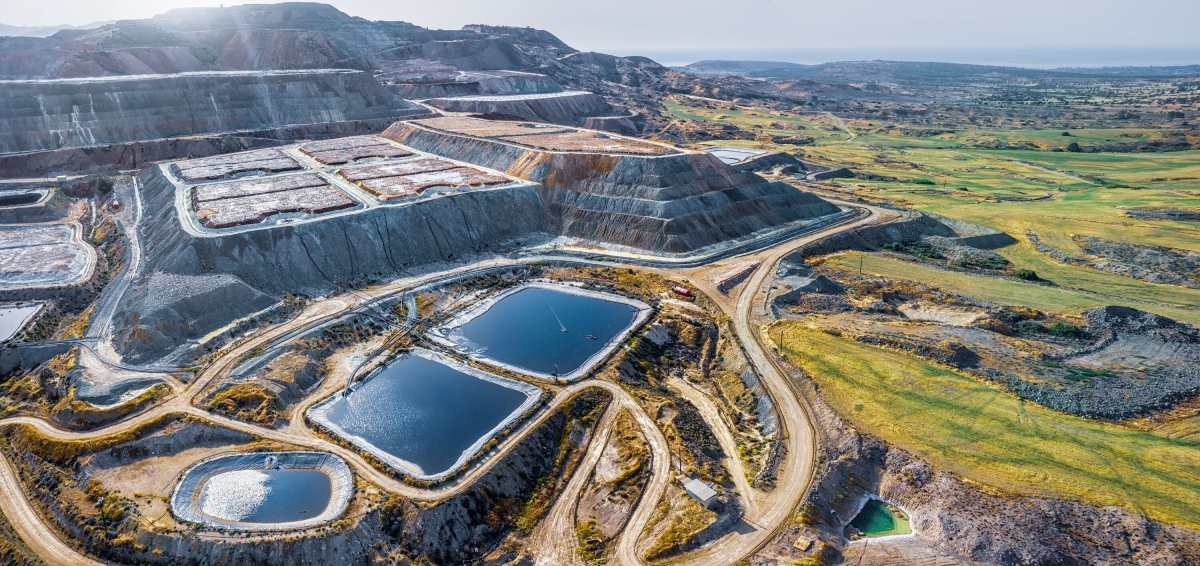


Shivam Misra from Emerson explains how modern wireless level measurement technologies are helping to improve process control, increase safety and reduce installation and lifecycle costs across remote mining operations.
Accurate and reliable level monitoring is fundamental to safe, efficient and profitable operations in the mining industry. Dependable level data supports essential activities such as process control, equipment protection, environmental stewardship and regulatory compliance. This is true across extraction, mineral processing, leaching circuits, slurry transport, tailings management, smelting, cement handling and fuel storage, among other critical areas.
Continuous level measurement technologies – including guided wave radar, non-contacting radar, differential pressure and submersible pressure transmitters – provide the precision required for monitoring liquids, slurries and solids throughout production. Point level switches, such as vibrating fork devices, play a critical role in overfill prevention. Together, these instruments form the backbone of operational visibility.
Achieving consistent, long-term measurement performance in mining applications can, however, be uniquely challenging. Processes frequently involve abrasive slurries, corrosive leaching solutions, dust-laden atmospheres, extreme temperature fluctuations, heavy vibration, and material build-up on instrumentation. In addition, many assets are located in remote or widely distributed areas. No single level technology performs best in every scenario, and effective selection requires careful alignment between the measurement principle and the application.
These challenges are compounded by the difficulty of installing and maintaining wired infrastructure across open pits, tailings areas, remote ponds, tall silos and distributed fuel stations. Running new cabling to these assets is often impractical, expensive, and in some cases dangerous due to terrain, weather conditions or ongoing heavy equipment movement. Historically, such constraints have forced operators to rely on manual level measurements or infrequent data collection, increasing safety risks and limiting visibility into critical storage and process operations.
The expanding wireless landscape
Wireless level measurement technologies directly address many of these long-standing constraints. By eliminating the need for signal cabling, conduit installation and additional I/O infrastructure, wireless devices provide a cost-effective means of collecting high-quality process data from even the most remote or inaccessible locations on a mine site.
Wireless networks enable faster deployment, simplified expansion, and low-cost installation, often without interrupting operations. Over the past two decades, WirelessHART® has become a widely adopted industrial standard, offering secure, reliable communication specifically designed for harsh process environments. Guided wave radar level transmitters, differential pressure transmitters, submersible pressure transmitters and vibrating fork point level switches have all been available in fully wireless configurations for many years.
Until recently, however, a notable gap remained: the lack of a native WirelessHART non-contacting radar level transmitter. Non-contacting radar is particularly valuable in mining due to its ability to operate reliably in dusty conditions, harsh weather, corrosive leach solutions, uneven surfaces and aggressive slurries, while avoiding direct contact with the process media.
The primary obstacle to fully wireless non-contacting radar technology has been power consumption. Traditional frequency-modulated continuous wave (FMCW) radar requires significant energy to generate and process signals, exceeding what battery-powered wireless transmitters could support. As a workaround, many organisations paired wired radar transmitters with Emerson’s THUM™ wireless adapters, enabling wireless communication but still requiring external power – thereby limiting installation flexibility.
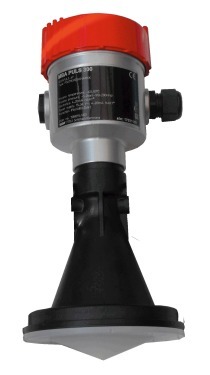
The introduction of the Rosemount™ 3408 Wireless Non-Contacting Radar Level Transmitter from Emerson addresses this limitation. By combining highly efficient 80 gigahertz FMCW radar electronics with WirelessHART communication and long-life power modules, the device uniquely provides a native wireless radar solution, without the need for external adapters or power wiring. This allows mining operations to deploy non-contacting radar in locations where cabling was previously cost-prohibitive, unsafe or physically impractical.
Typical applications in metals and mining
The following examples highlight common mining industry applications where wireless solutions deliver measurable improvements in safety, environmental protection and operational performance.
Monitoring open ponds and tailings dams
Open ponds and tailings dams are central to mining operations, serving functions such as waste slurry storage, evaporation control, leachate collection and water management. Maintaining accurate, continuous visibility into pond and tailings dam levels is essential for preventing environmental incidents, managing stormwater inflow, protecting dam integrity and ensuring regulatory compliance. Inadequate visibility into pond and tailings dam conditions can be a contributing factor in catastrophic outcomes. This was illustrated by the 2019 Brumadinho tailings dam collapse in Brazil, where a sudden failure released vast quantities of tailings, leading to major loss of life, widespread environmental damage, and long-term regulatory and financial impacts for the operator.
Wireless level instrumentation allows operators to monitor open ponds and tailings dams in real time without installing extensive cabling around large, unstable or difficult-to-access areas. Instruments can be installed on berms, floating structures or fixed supports and integrated into an existing wireless network with minimal disruption. Wireless non-contacting radar level transmitters equipped with an atmospheric temperature and pressure antenna are well suited to open pond applications. The antenna is a sealed assembly that isolates radar electronics from harsh process conditions. High-frequency 80 gigahertz FMCW radar signals cut through dust, condensation, wind, intense sunlight and thermal gradients to deliver accurate surface measurements. For sites with existing radar installations, a wired non-contacting radar transmitter paired with a THUM adapter can provide an effective hybrid solution.
By delivering continuous level data and configurable high- or low-level alerts, wireless radar devices help prevent overfilling, detect seepage or unexpected losses, and support optimal evaporation or retention strategies. This reduces the need for manual inspections, enhances environmental protection and strengthens regulatory compliance.
Cement storage tanks and silos
Cement storage is integral to many mining operations, particularly at facilities with on-site cement production, smelter support infrastructure, or adjacent construction material plants. Cement silos present a challenging measurement environment due to dense airborne dust, frequent filling and emptying cycles, and material build-up on vessel walls. These conditions can impair the performance of traditional level technologies, including ultrasonic devices, resulting in unreliable readings and increased maintenance requirements.
Reliable wireless level monitoring enables operators to track cement inventory remotely, reduce the risk of overfilling or material shortages, and minimise windshield time spent travelling to remote or difficult-to-access silos. The latest wireless non-contacting radar level transmitters deliver accurate, repeatable measurements, while built-in diagnostics can alert operators when antenna cleaning or maintenance is required. This supports proactive intervention and helps to prevent unplanned downtime. For solids applications involving low-dielectric materials such as dry cement – where some non-contacting technologies may struggle – wireless guided wave radar solutions provide robust and dependable performance.
Fuel stations for mobile equipment
Mining operations rely heavily on mobile equipment such as haul trucks, loaders and drilling rigs, which are typically refuelled at distributed fuel stations across the site. Each station may include multiple small storage tanks, making accurate inventory management challenging. Wireless fuel inventory systems can connect tank level and temperature measurements across multiple locations and transmit real-time data to the control room or digital inventory platforms. This approach reduces manual gauging, improves fuel accountability, helps detect losses or theft, and ensures uninterrupted fuel supply to critical mining equipment.
Copper leaching via solvent extraction (SX)
Solvent extraction and electrowinning (SX/EW) plants depend on stable, continuous level measurement across a wide range of vessels, including mixers, settlers, organic and aqueous tanks, and interstage storage. These assets are typically distributed over large outdoor areas, often in remote locations, making hard-wired instrumentation expensive and difficult to install and maintain. Wireless level measurement is therefore well suited to SX/EW operations, providing reliable process data while reducing infrastructure complexity and installation costs.
The operational advantages of wireless level measurement in solvent extraction applications are demonstrated at a large copper mining operation in Chile. Prior to modernisation, level readings were taken using manual hand-dip methods. These measurements were inherently inconsistent, as accuracy depended heavily on operator technique and required personnel to enter hazardous areas.
To improve both safety and reliability, the company deployed Rosemount 3308 Wireless Guided Wave Radar Level Transmitters. The solution delivered continuous, accurate level measurements across the SX process, eliminating manual rounds entirely. Built-in Signal Quality Metrics diagnostics provide early indication of probe fouling or cleaning requirements, enabling proactive maintenance. As a result, the plant achieved more stable operation, improved uptime and higher overall process efficiency. The wireless deployment also significantly enhanced personnel safety by removing the need for workers to access hazardous areas, while reducing installation time and costs by eliminating extensive cabling.
Conclusion
With assets spread across large outdoor areas and exposed to severe environmental conditions, mining is a sector where wireless level instrumentation is proving particularly valuable. The availability of native wireless non-contacting radar level transmitters – alongside wireless guided wave radar devices, differential pressure transmitters, submersible pressure transmitters and point level switches – significantly expands the possibilities for level measurement in mining operations.
Wireless level technologies enable more frequent monitoring, improved safety, reduced manual field rounds and enhanced situational awareness across sprawling sites. Wireless networks support faster installation and plug-and-play commissioning and can be expanded easily. As the industry continues its digital transformation, wireless level solutions are becoming a practical foundation for smarter, safer and more efficient operations. With accurate, low-maintenance and easily deployable instrumentation, mining companies gain the visibility needed to optimise production, strengthen environmental compliance, reduce operational risk and support long-term sustainability.