

Construction waste disposal company Feess and engineering company DEANTEC
are expanding their operations nationwide

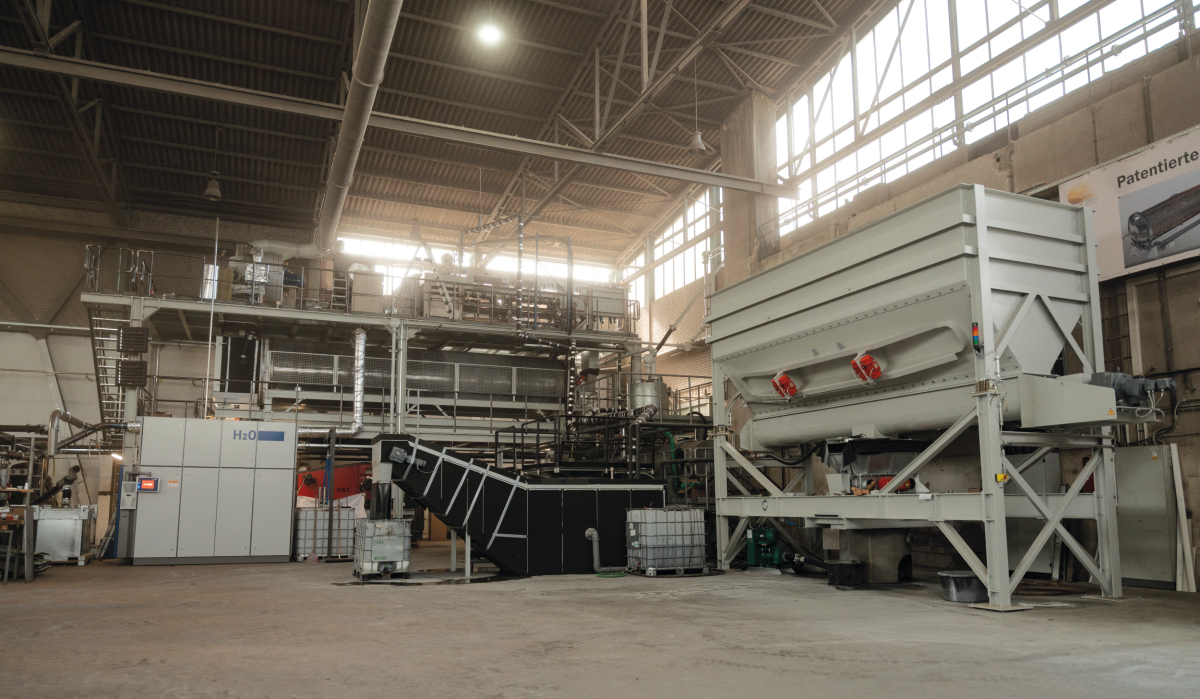
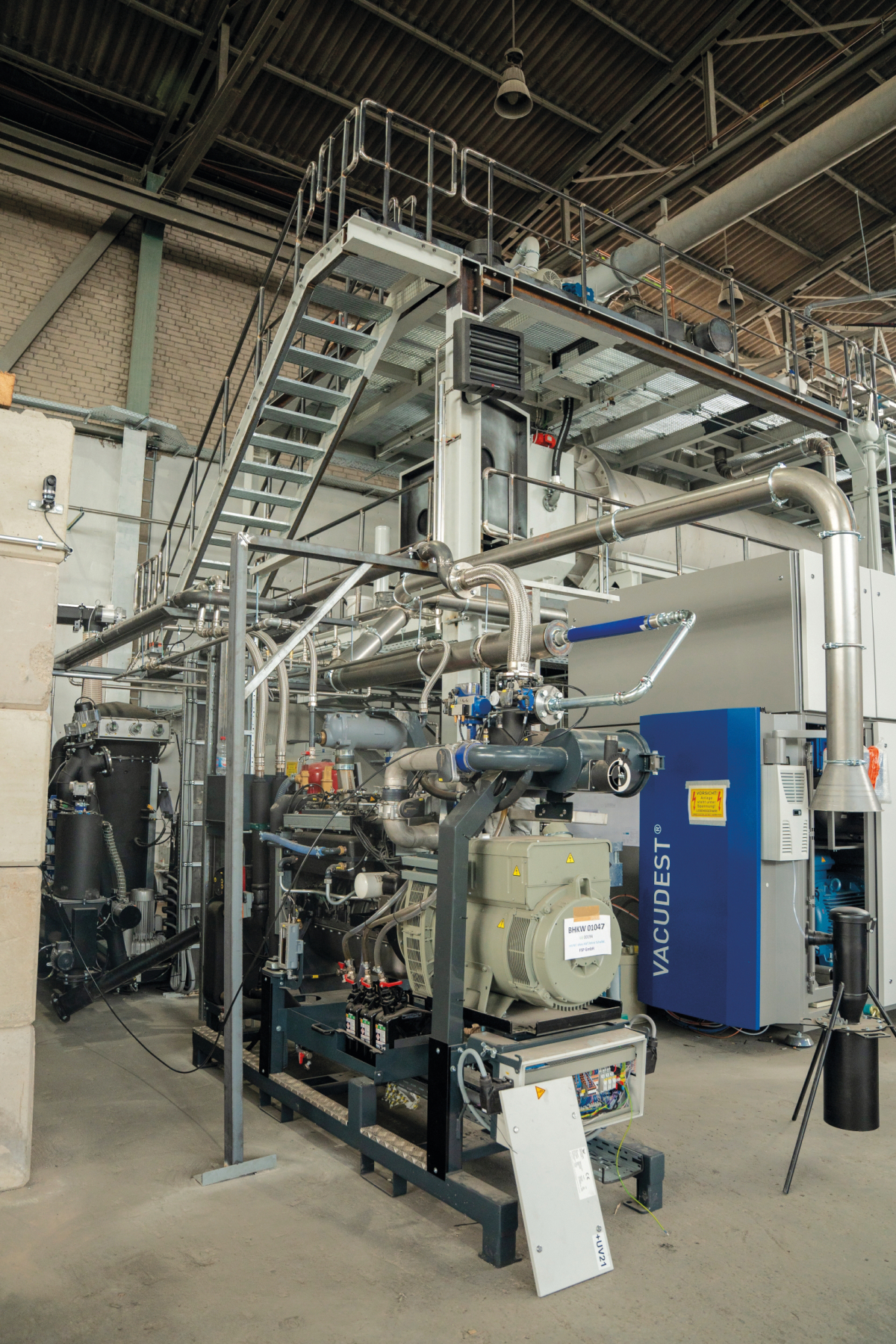
The plant is operated by Foundry Sand Processing GmbH (FSP), founded in 2022, which aims to make an established market in the foundry industry recyclable. Additional plants are planned nationwide, for example on behalf of automotive suppliers or sand suppliers, who are increasingly discovering the benefits of the circular economy. The outlook for FSP is promising because two strong partners have joined forces as equal shareholders, each bringing their nationwide network to the table: Feess, a construction waste recycler based in Kirchheim, contributes its waste management expertise, while the Palatinate-based engineering firm DEANTEC specializes internationally in foundry and bulk material technology. Its acronym stands for Denke Anlagen-Technik. Owner Falk Denke holds patents on a drying process that energy-efficiently dries sand after it has been cleaned of binders. Foundries use the resulting regenerated sand to produce sand cores from which engine and transmission parts are cast.
The fact that the federal government sees great potential for economic and environmental policy in this innovation is evidenced by the fact that FSP received over € 1 million in funding through KfW Bank. The new plant went into operation at Am Westkai in Stuttgart, where Feess operates a facility. “This allows sand and residual materials to be transported to and from the site in an environmentally friendly manner by rail and sea,” says Feess Managing Director Alexander Feeß.
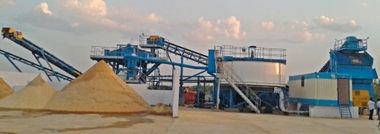
During wet cleaning in a closed water circuit, the binder components are washed out, bound in the sludge, and disposed of. The sand is then dried at over 100°C, and the heat from the steam is recovered. The plant is designed for a capacity of 3 t/h. “The cleaned sand is of such high quality that it can be used to produce all core geometries just as effectively as with new sand,” says FSP Managing Director Stefan Zimmermann.
In the mechanical-thermal cleaning process, which will go into operation this spring in the same facility, the sand grains are pre-cleaned by friction in an initial mechanical stage. In the second thermal stage, the organic binder components are burned off.
In the third and final stage, the sand is mechanically post-cleaned again – similar to the first stage. This system is also designed for a capacity of 3 t/h. The mechanical-thermal combination is necessary when the used sand consists of a mixture of cold-box cores and bentonite-bonded molding sand. For pure cold-box sand, the thermal stage alone is sufficient.
Both processes are required to specifically clean both inorganic binders, which are used in aluminum and light metal foundries in the automotive industry, and the organic binders used in iron and steel foundries. Feeß, whose company received the German Environmental Award in 2016 for its construction waste recycling process, emphasizes that the energy used is also generated from renewable sources. It comes from synthesis gas produced by a wood chip plant located nearby. This gas is used to generate electricity via a generator. Its waste heat is used for washing and drying the sand. In this way, 95 % of the calorific value of the wood chips is utilized. The patented drying technology developed in 2019 cuts the energy required for drying in half by recovering the condensation energy.
In a conventional bulk material dryer, the water evaporated from the bulk material turns back into liquid, which consumes an enormous amount of energy. In Denke’s process, however, the energy expended remains within the system because the steam retains its gaseous state. The new plant creates six jobs in electrical engineering, machine operation, administration, and sales, and generates an annual turnover of € 2 million.
Feeß says: “As FSP, we want to sell such plants nationwide and operate them on-site upon request.” The larger a plant is, the more economically it operates. However, due to transportation costs, the sand should not be used more than 180 km away. During mechanical-thermal regeneration, up to 5 % of the fine fraction is lost due to abrasion and is no longer available as sand, and approximately 15 % of organic binders and foundry raw materials are generated.
Operating such plants can also be attractive for sand suppliers, as they can conserve their resources and make optimal use of their freight capacity. The used foundry sand is transported either in big bags, dump trucks, or silo trucks. At the FSP site, the material is processed by customer and in batches. The process ensures that each customer receives their batch from their own used sand. Surplus regenerated material can be reused in road construction, cement and gypsum production, or in the glass industry.
Feeß, who does not publicly disclose the costs for the two new plants – especially since they also include high development costs – says, however, that as production volumes increase, the prices of the plants will become more affordable. Ultimately, the domestic machinery and plant engineering sector also benefits from rising demand. Denke explains: “We have 20 main suppliers for the hundreds of components we use to assemble the plants.”
With the first two reference plants, which can now be easily replicated, Denke is gathering experience to further develop them. One goal: to run the night shift completely unmanned and fully automated. Schwarzelühr-Sutter and Baumann emphasized that the plants are “a sign of hope for Germany as a business location,” which is currently in crisis. The circular economy is climate protection and is becoming a factor for the region and the economy. Feeß recalled the early days after a pilot plant in Cologne failed in 2021: “Rhenish cheerfulness met Swabian skepticism.” He thanked the executives at Mercedes-Benz AG for establishing the initial contact back then. This enabled Feess GmbH to enter a new business sector, allowing it to expand beyond the regional level for the first time.