

Rare earths and critical metals: Brazil as a way out
16.01.2026The US has sent a strong message with its attack on Venezuela. This also applies to the competition with China for critical metals. Brazil can play a key role in this. The country at the foot of Sugarloaf Mountain has large reserves of raw materials and can offer a way out of the West's dilemma.
 © St. George Mining Ltd.
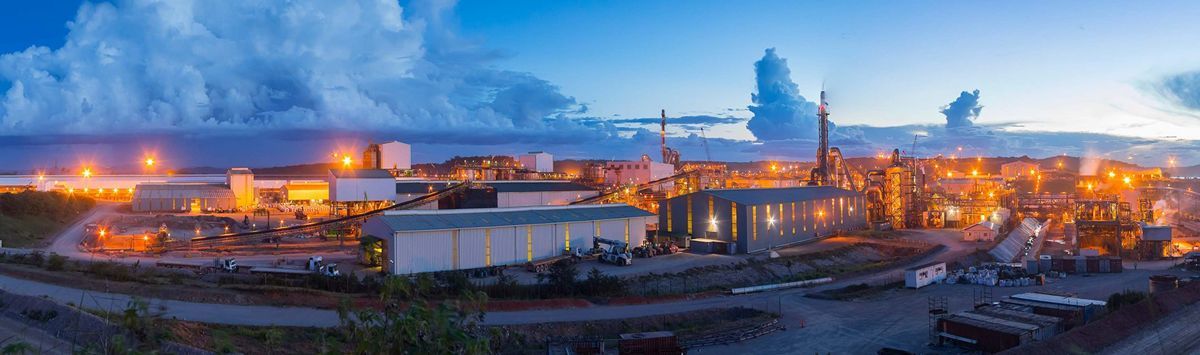
Just a few months ago, Donald Trump punished Brazil for its treatment of former President Bolsonaro. However, some of the tariffs have already been withdrawn, and there is a reason for that. Brazil not only supplies the US with large quantities of foodstuffs such as meat and coffee, but also with strategically important metals. These already include niobium, of which Brazil controls 90 % of the global supply. Demand is steadily increasing here, as niobium is indispensable for the production of lighter and stronger steel alloys and for applications in the aerospace industry. But that is only part of the country's clout. Brazil also scores points with its lithium deposits. Demand for lithium is expected to increase 40-fold by 2040 due to electric cars and energy storage. In the case of rare earths, where China controls large parts of the global market, demand is forecast to rise to seven to ten times its current level. These are essential for permanent magnets used in wind turbines, military technology, and electric motors. Perhaps somewhat surprisingly, nickel also features here. The metal was one of the weakest performers in 2025 because there is currently an oversupply from Indonesia. However, initial market observers are expecting a rebound here as well. In addition, global demand for nickel is expected to double. The focus here is on the production of high-purity nickel sulfates for lithium-ion batteries. It is also used in a variety of industrial applications.
© St. George Mining Ltd.
Just a few months ago, Donald Trump punished Brazil for its treatment of former President Bolsonaro. However, some of the tariffs have already been withdrawn, and there is a reason for that. Brazil not only supplies the US with large quantities of foodstuffs such as meat and coffee, but also with strategically important metals. These already include niobium, of which Brazil controls 90 % of the global supply. Demand is steadily increasing here, as niobium is indispensable for the production of lighter and stronger steel alloys and for applications in the aerospace industry. But that is only part of the country's clout. Brazil also scores points with its lithium deposits. Demand for lithium is expected to increase 40-fold by 2040 due to electric cars and energy storage. In the case of rare earths, where China controls large parts of the global market, demand is forecast to rise to seven to ten times its current level. These are essential for permanent magnets used in wind turbines, military technology, and electric motors. Perhaps somewhat surprisingly, nickel also features here. The metal was one of the weakest performers in 2025 because there is currently an oversupply from Indonesia. However, initial market observers are expecting a rebound here as well. In addition, global demand for nickel is expected to double. The focus here is on the production of high-purity nickel sulfates for lithium-ion batteries. It is also used in a variety of industrial applications.
 © St. George Mining Ltd.
Brazil could thus play a key role in establishing a supply chain for critical metals outside China. The US has been working intensively for two years to reduce its dependence. To this end, it has not even shied away from investing directly in companies or supporting them with loans. The best examples are Trilogy Metals (copper, cobalt), Lithium Americas (lithium), MP Materials (rare earths), and Perpetua Resources (antimony). In addition to the US, Japan and the European Union are also committed to and willing to reduce dependencies. To this end, appropriate funds have been approved and faster approval processes for mining projects have been decided upon. The EU has created the legal framework for this with the Critical Raw Materials Act (CRMA), within which member states can operate. A total of 47 projects within the EU were initially selected, followed by a further 13 projects in friendly third countries; together, the investment requirement is estimated at around € 22.5 billion in the EU plus around € 5.5 billion in third countries. Germany has provided a fund of around € 1 billion. For Germany, the EU representation explicitly mentions several projects, such as Vulcan Energie Ressourcen GmbH in Karlsruhe, which want to extract lithium. However, the big winners of this decoupling from Chinese supply chains are the resource-rich countries of Australia and Canada. The Australians have already signed a memorandum of understanding with the US. According to the government in Canberra, the volume is around US$ 8.5 billion.
© St. George Mining Ltd.
Brazil could thus play a key role in establishing a supply chain for critical metals outside China. The US has been working intensively for two years to reduce its dependence. To this end, it has not even shied away from investing directly in companies or supporting them with loans. The best examples are Trilogy Metals (copper, cobalt), Lithium Americas (lithium), MP Materials (rare earths), and Perpetua Resources (antimony). In addition to the US, Japan and the European Union are also committed to and willing to reduce dependencies. To this end, appropriate funds have been approved and faster approval processes for mining projects have been decided upon. The EU has created the legal framework for this with the Critical Raw Materials Act (CRMA), within which member states can operate. A total of 47 projects within the EU were initially selected, followed by a further 13 projects in friendly third countries; together, the investment requirement is estimated at around € 22.5 billion in the EU plus around € 5.5 billion in third countries. Germany has provided a fund of around € 1 billion. For Germany, the EU representation explicitly mentions several projects, such as Vulcan Energie Ressourcen GmbH in Karlsruhe, which want to extract lithium. However, the big winners of this decoupling from Chinese supply chains are the resource-rich countries of Australia and Canada. The Australians have already signed a memorandum of understanding with the US. According to the government in Canberra, the volume is around US$ 8.5 billion.
Canada: The government in Ottawa, for its part, has decided to establish a US$ 2 billion sovereign wealth fund for critical minerals and has passed it in the new budget. The aim is to accelerate investment in strategic mining projects and strengthen national supply chains. In addition to the new sovereign wealth fund, a CAD 371.8 million “First and Last Mile Fund” is also to be set up. The country's main aim is to support the development of the upstream and midstream stages of the supply chains for critical minerals.
 © St. George Mining Ltd.
St. George Mining has its sights set on production
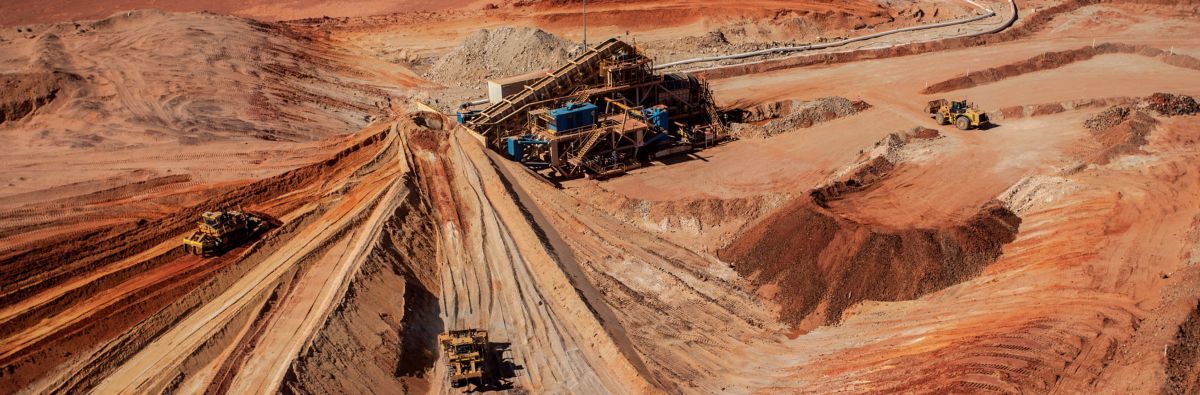
The market for critical metals offers opportunities for investors, as there are only a few companies that already have advanced projects. These include St. George Mining (AUD 0.11; AU000000SGQ8). The Australian company is developing the Araxá project in Brazil. The company plans to start mining niobium there in 2027 and rare earths a year later. To date, the property has a JORC-compliant resource estimate of 41.2 million tons averaging 0.68 % niobium pentoxide and 40.6 million tons averaging 4.13 % rare earth elements. The rare earth deposit is one of the highest grade outside China and is comparable in volume to MP Materials' Mountain Pass project in the US. Drilling is currently underway, and St. George Mining hopes to significantly increase the resource. In addition, St. George Mining is looking to further process the materials. To this end, it has entered into a strategic alliance with the US group REAlloys. REAlloys produces high-performance magnetic materials from neodymium-iron-boron (NdFeB) and samarium-cobalt (SmCo) for US government organizations, including the Defense Logistics Agency (DLA) and the US Department of Energy's AMES National Laboratory (AMES). It also works for US industrial companies in the defense, aerospace, and electronics sectors. Accordingly, St George Mining could participate in the rare earths boom in the United States.
Cooperation in the US
Commodities billionaire Gina Reinhart also seems to have recognized that the company is strategically well positioned. In the fall, the company raised AUD 72.5 million from investors, with AUD 22.5 million coming from Reinhart. These funds will finance St George Mining until a decision is made on the mine construction. In addition, the company has already put out feelers to the US. St George has entered into a partnership with the US group REAlloys. REAlloys produces high-performance magnetic materials from neodymium-iron-boron (NdFeB) and samarium-cobalt (SmCo) for US government organizations, including the Defense Logistics Agency (DLA) and the US Department of Energy's AMES National Laboratory (AMES). It also works for US industrial companies in the defense, aerospace, and electronics sectors. Accordingly, St. George Mining could participate in the rare earths boom in the United States.
Analysts with high price targets
In light of market developments, analysts have recently raised their price targets for St George Mining significantly. Evolution Capital sees potential and announced a price target of AUD 0.31. Petra Capital, one of Australia's largest brokers, gave the green light and sees a price target of AUD 0.44. Now Australia's largest investment bank has also taken a close look at St George Mining. Macquarie analysts gave an “outperform” rating and see a 12-month price target of AUD 0.20 for the stock. That would be almost double the current price in the near future, with Macquarie also forecasting an optimistic scenario with a price of AUD 0.50 per share.
Sources:
[1] China reduces exports of rare earth magnets: https://www.spiegel.de/wirtschaft/handelskrieg-china-bremst-export-seltener-erde-magneten-sorge-wegen-abhaengigkeit-a-d4b824f9-e9ac-45c9-ba5a-40dc053a76b5
[2] US government invests in Trilogy Metals: https://trilogymetals.com/news-and-media/news/trilogy-metals-announces-strategic-investment-by-us-federal-government/
[3] USA and Australia agree on far-reaching cooperation in the raw materials sector: https://www.tagesschau.de/wirtschaft/weltwirtschaft/seltene-erden-usa-australien-china-100.html
[4] G7 want to reduce dependence on China: https://www.reuters.com/world/china/g7-weighs-price-floors-rare-earths-counter-chinas-dominance-sources-say-2025-09-24/
[5] Canada launches sovereign wealth fund for critical metals: https://www.miningweekly.com/article/canada-launches-c2bn-critical-minerals-sovereign-fund-2025-11-05
[6] EU adopts Critical Raw Materials Act: https://commission.europa.eu/topics/competitiveness/green-deal-industrial-plan/european-critical-raw-materials-act_de
[7] Canada establishes fund for critical metals: https://www.canada.ca/en/campaign/critical-minerals-in-canada/federal-support-for-critical-mineral-projects-and-value-chains/critical-minerals-infrastructure-fund1.html