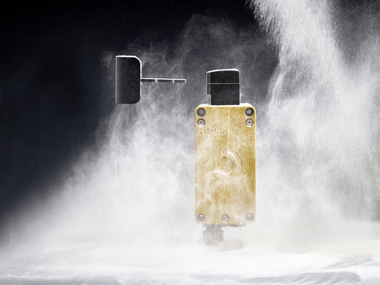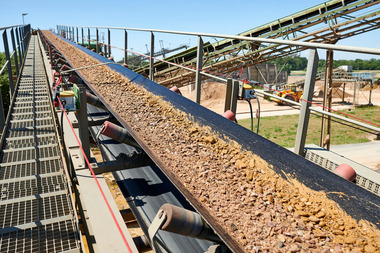


New emergency pull-wire and belt alignment switch in a heavy-duty and radio-controlled version
 © Dr. Petra Strunk, Bauverlag BV GmbH
 © Dr. Petra Strunk, Bauverlag BV GmbH
 © Dr. Petra Strunk, Bauverlag BV GmbH
 © Nicole Dony, Bauverlag BV GmbH
 © Dr. Petra Strunk, Bauverlag BV GmbH
 © Dr. Petra Strunk, Bauverlag BV GmbH
 © steute
 © steute
 © Dr. Petra Strunk, Bauverlag BV GmbH
 © Dr. Petra Strunk, Bauverlag BV GmbH
 © steute
 © Dr. Petra Strunk, Bauverlag BV GmbH
 © Dr. Petra Strunk, Bauverlag BV GmbH
Which switchgear manufacturer has the opportunity to test its products in practical applications practically on its doorstep? And how do switchgear manufacturer and users build such a relationship of trust? The following report also presents the latest development from steute Technologies in practice.
steute Technologies, an internationally active technology company headquartered in Löhne (North Rhine-Westphalia), was founded in 1961 as “STEUTE-Schaltgerätebau Rose & Sölken KG”. Until 2024, it was a family-run business under the leadership of Stefan Schmersal. Today, the company, with its approximately 540 employees, is managed by the global investment firm Battery Ventures, with a management team led by CEO Martin Kunz. The company develops and manufactures high-quality switchgear, sensors, control units and wireless system solutions for industrial and medical applications.
One of the latest developments is the heavy-duty emergency pull-wire switch. The ZS 92 S series of cable-pull emergency switches have proven their worth worldwide in mining technology and in underground operations, such as tunnelling. They can be installed flexibly and cover hazard zones up to a length of 200 m – based on the principle that a single pull of the cable brings the conveyor belt to a safe halt. Design features such as the multi-layer coating on the robust die-cast aluminium housing ensure trouble-free operation under adverse conditions. This robust switch is designed for temperature ranges from -40°C to +85°C. And through the use of special cable guides with internal rollers, even non-linear hazard zones can be safeguarded. Another new development is the transmission of the switch signal via radio to a central receiving station, enabling the systems to be monitored centrally. However, radio transmission in the case of cable-pull emergency stop switches is not suitable for the emergency stop function, but only for indicating which switch in the field has been triggered.
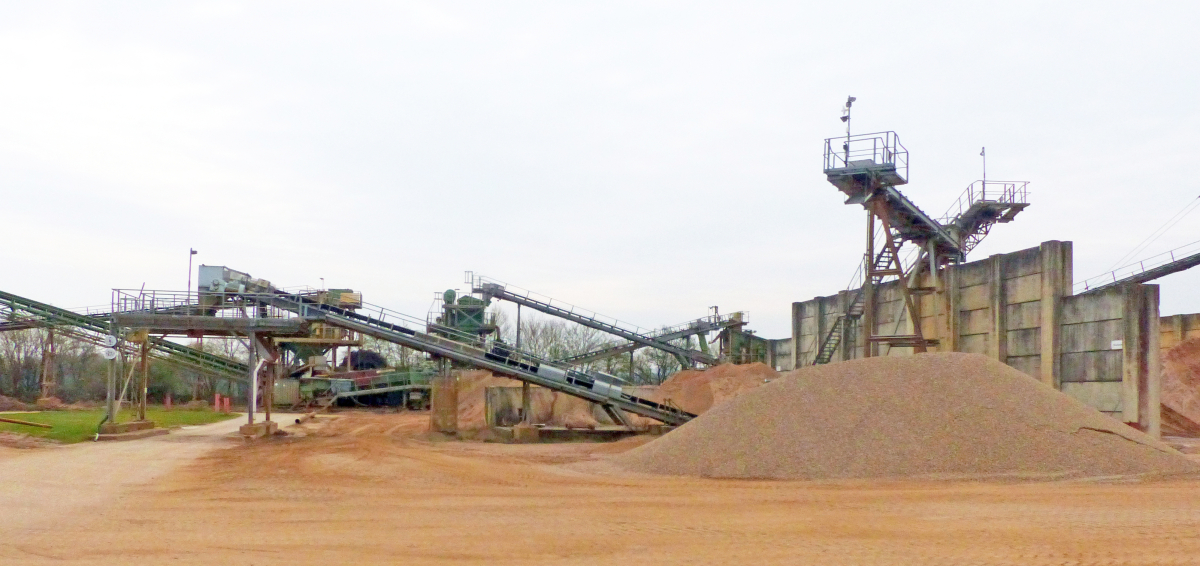
Steute is testing this development directly in active sand and gravel extraction operations – on the site of the Vennebeck gravel plant, which forms part of the Rhein-Umschlag Group. The Group owns a total of five gravel and sand plants, either directly or through partners, the majority of which are located along the Middle Weser. There, around 1.7 million t of high-quality building materials are extracted annually, predominantly from the group’s own land, and are largely transported to their destinations in an environmentally friendly manner by inland waterway vessel.
The site in Vennebeck is of great geological and economic interest. During the last ice age, the River Weser carved a path between the Wiehen and Weser mountain ranges, creating the Porta Westfalica. Over the course of several hundred thousand years, the river deposited large quantities of sand and gravel carried from upstream into the Weser floodplain. Today, these deposits form extensive gravel and sand deposits that are ideally suited as building materials. This material consists partly of quartz, limestone, sandstone and other rocks that were transported from the upper reaches of the Weser. The raw material found here is of particularly high quality and easy to process, as it has low reactivity.
At the Vennebeck gravel plant, sand and gravel are extracted from a lake using a grab dredger from great water depths. The subsequent conveyor belt is laid floating across the lake and then runs ashore via further conveyor systems for processing into various sand and gravel fractions. Along all these individual conveyor belts, cable-pull emergency stop switches from steute Technologies are installed to test them in their operating environment, including the latest version of the wireless belt alignment switches.
The team from AT MINERAL PROCESSING met on site at the Vennebeck gravel plant with Argjent Fetahaj, Product Manager at Controltec, and Rainer Lumme, Business Development Manager at Controltec – both from steute Technologies – as well as Nils Rexroth, Operations Manager at Rhein Umschlag Kieswerke, to discuss their experiences with the emergency pull-wire stop switch during ongoing operations. In addition, the AT MINERAL PROCESSING team also had the very welcome opportunity to get to know the Vennebeck plant better.
Field trial for new wireless belt alignment switches at the gravel plant
AT MINERAL PROCESSING: Mr Rexroth, could you start by briefly introducing your gravel plant to us? What makes this site special and what products do you manufacture here?
Nils Rexroth: We mainly produce aggregates for the concrete industry. These include various sand and gravel fractions such as 0/2, 2/8, 8/16 and 16/32 mm, as well as different mixed-grain sizes. I oversee a total of three gravel plants, two of which are located in the Stolzenau area. The deposits vary significantly from region to region. Before Porta Westfalica, the material is significantly richer in stone; beyond Porta, the sand content increases. This has a corresponding effect on the processing. At this site, loading takes place exclusively by lorry. At our other plants, we also have the option of loading onto ships or a combined ship/lorry loading system. Our company’s head office is in Oldenburg.
AT MINERAL PROCESSING: Are there any distinctive features that set this site apart from other gravel pits?
Nils Rexroth: The material itself does not fundamentally differ from other regional gravel deposits. However, our plant technology makes a significant difference. We have fitted the entire processing plant with a load-dependent control system. The plant now regulates its output autonomously, taking into account both the material quality and the current machine utilisation. This enables us to maintain a consistently high standard of production whilst optimising machine utilisation. The effect is clearly measurable: thanks to this optimisation, we have been able to reduce the plant’s energy consumption by around 36 %.
AT MINERAL PROCESSING: How did the collaboration between your gravel plant and steute actually come about?
Argjent Fetahaj: Actually, it all began rather by chance. At the time, Nils Rexroth was still working at a different site. We wanted to produce an installation video for our pull-wire and emergency stop switches and were looking for a suitable conveyor system to use as a real-world setting.
I contacted various gravel plants and eventually got in touch with Nils Rexroth. He simply said: “Just pop round.” That’s where we eventually filmed our installation video, which is still available online today. This initial contact developed into a close collaboration.
AT MINERAL PROCESSING: So a video shoot turned into a long-term partnership?
Rainer Lumme: Exactly. Over the years, we’ve realised just how valuable direct dialogue with an operator is. That’s why we came up with the idea of using the gravel plant as a test site for new developments.
We provide the switches, regularly monitor their use on site and, in return, receive immediate feedback from real-world conditions. It is precisely this feedback that is extremely valuable for our product development. Not only do we learn how our own products perform in day-to-day operations, but also what weaknesses other solutions have and where there is room for improvement. Today, we are gradually replacing faulty switches at the plant with our systems and testing them in a wide variety of locations within the facility.
Argjent Fetahaj: The site offers ideal conditions for this. The gravel plant is located just a few kilometres from our company. This enables us to trial new products under real-world conditions before they are officially launched on the market. For example, the new ZS 92 SR wireless belt misalignment switch system was initially installed here and tested over an extended period. This extremely robust switching device, with a multi-coated die-cast aluminium housing, monitors the movement of belt conveyors. These two technologies have now been combined. The belt alignment switch is connected to a separate RF I/O module. Via sWave, this transmitter unit passes on any signals arriving from the switch to a wireless relay component acting as a receiver unit – reliably, without cables, and over outdoor distances of up to approx. 400 m. Users can install additional repeaters for even longer distances.
The device’s actuating lever detects off-centre belt movement, which can occur, for example, due to uneven loading. In this case, depending on how it is integrated into the control system, the switch triggers either a stop of the belt conveyor or a correction of the belt’s movement.
The collaboration now extends far beyond mere product testing. Our sales partners visit the gravel plant regularly to see the products in action. There is a world of difference between seeing a switch brand new on a trade fair stand and seeing it under real operating conditions in a heavily used conveyor system.
We also hold international sales training courses once a year. Following the theoretical sessions, participants visit the gravel plant and then experience the products in practical use. This field trip has now become an integral part of the training programme.
Why wireless? Practical experience from the gravel plant
AT MINERAL PROCESSING: You have now been testing the new wireless belt misalignment switch for several months during live operation. What advantages do you see from the user’s perspective?
Nils Rexroth: For us, the greatest advantages arise wherever conveyor systems are frequently modified or expanded. In gravel extraction, systems change regularly – conveyor belts are repositioned, new sections are added or existing ones are adapted. With conventional switches, this involves a considerable amount of rewiring every time. With the wireless solution, this is virtually eliminated.
Another aspect is the increasing digitalisation of our plants. The more flexibly components can be integrated, the easier it is to implement modifications. Wireless technology offers significantly more scope here than a traditional wired installation.
AT MINERAL PROCESSING: Does the protection of the infrastructure also play a role?
Nils Rexroth: Yes, even a greater one than one might initially assume. Cable theft has now become a real problem for us. Just recently, cables were stolen from our site again. In the past, thieves even removed entire sections of cable all the way to the grab dredger. Every cable we can do without in future therefore not only reduces the installation effort but also minimises potential targets for theft.
Argjent Fetahaj: That is indeed a point we’ve learnt from practical experience. Originally, our main priorities were ease of installation and flexibility. It was only through discussions with users that it became clear that eliminating long cable runs offers yet another, very practical advantage.
Less installation, more flexibility
AT MINERAL PROCESSING: Has the wireless switch also proved its worth in day-to-day operations?
Nils Rexroth: Absolutely. Wireless technology brings significant advantages for our plant control systems. The installation effort is reduced considerably because there is no longer any need to lay long cable runs. This reduces both assembly time and installation costs. This is a major advantage, particularly for mobile or frequently reconfigured plants.
AT MINERAL PROCESSING: Are there any functions that go beyond mere signal transmission?
Argjent Fetahaj: Yes. A key component is the continuous monitoring of the system. Our wireless solution uses what is known as a ‘keep-alive’ signal. The transmitter reports to the receiver at regular intervals that the system is operational. If this signal fails – for example, due to a flat battery or a fault – the operator is immediately alerted. The fault can be indicated, for example, by a signal light or an audible warning signal. This means the operator knows at all times whether the switch is actually operational.
AT MINERAL PROCESSING: Is remote monitoring also conceivable in the future?
Argjent Fetahaj: In principle, yes. The technical basis for this is in place. At present, we are initially concentrating on reliable status monitoring directly at the plant. In future, however, this information can of course also be integrated into higher-level systems and used for remote maintenance or condition monitoring concepts.
Mobile plants with specific requirements
AT MINERAL PROCESSING: What is actually new about your wireless belt misalignment switch?
Rainer Lumme: The belt misalignment switch itself has been a tried-and-tested product for decades. What is new is the combination of this established technology with our industrial wireless technology. This opens up entirely new applications. Users can also deploy a belt misalignment switch in locations where no electrical infrastructure currently exists or where cabling would hardly be economically viable. This significantly reduces the installation effort, particularly in the case of extensive conveyor systems.
AT MINERAL PROCESSING: The test setup is located on a grab dredger. What challenges does this present?
Argjent Fetahaj: Unlike in a conventional industrial plant, the transmitter and receiver are not permanently fixed in position here. There is continuous movement between the two components. As a result, the spatial conditions of the radio link are constantly changing. This is precisely why this location is ideal as a test site. If the system operates reliably under these changing conditions, it provides very strong evidence of its practical suitability. Naturally, the specified radio ranges must be adhered to during installation. As long as this is the case, the system operates reliably.
AT MINERAL PROCESSING: Is the current range around 400 m?
Argjent Fetahaj: Correct. This installation operates over a distance of around 400 m. This is made possible by an advanced transmitter with an external antenna. Compared to an integrated antenna, this improves both the range and the reliability of the radio connection. The external antenna can be mounted in an optimal position, thereby ensuring stable communication even under difficult environmental conditions.
Field test under real-world operating conditions
AT MINERAL PROCESSING: You have now been testing the wireless belt misalignment switch in live operation for around nine months. What has been your experience so far?
Nils Rexroth: Overall, we are very satisfied with the results so far. The biggest advantage is clearly the ease of installation. Particularly for conveyor routes spanning several hundred metres and/or where there is no direct connection to the control room, conventional cabling would involve considerable effort and associated costs. The wireless solution, on the other hand, can be integrated much more quickly. In addition, we regularly modify or expand our conveying systems. Without long cable runs, we are much more flexible and can implement adjustments much more easily.
Another advantage is reliability. The system has run stably throughout the test period so far. Even external influences such as electromagnetic fields – for example, from a transformer within the radio link – have not affected the transmission.
AT MINERAL PROCESSING: So, the test has so far proceeded without any failures?
Nils Rexroth: Yes. Of course, the field test is still ongoing, but so far we have not identified any limitations. The components are permanently installed outdoors and remain there even during the winter months. Although we do not operate during severe frost, the switches remain exposed to the elements at all times. That, too, is part of a realistic long-term test.
AT MINERAL PROCESSING: How significant is this long-term test for steute?
Rainer Lumme: For us, a full annual cycle is crucial. Only once a system has been through summer heat, intense sunlight, rain, frost and temperature fluctuations can its actual suitability for everyday use be assessed. The devices themselves are designed for a temperature range of -20 to +65°C. In addition, we naturally also monitor factors such as humidity or condensation. Such findings are incorporated directly into the further development of the products.
Wireless technology opens up new possibilities
AT MINERAL PROCESSING: The current installation spans around 400 m. Has the maximum range been reached?
Argjent Fetahaj: No. The current test installation serves as a reference application and operates over around 400 m. That is already sufficient for many conveyor systems. At the same time, we are continuously developing the wireless technology further. In future, significantly greater ranges will be possible – potentially extending into the kilometre range. This will open up entirely new fields of application, particularly in mining or in the case of very extensive conveyor systems.
If necessary, ranges can already be extended today with the help of additional radio components. In the long term, however, our aim is to reliably cover greater distances without additional infrastructure.
AT MINERAL PROCESSING: This is likely to be of interest internationally as well?
Rainer Lumme: Absolutely. There is enormous potential, particularly in countries with very large opencast mines or extensive conveyor systems. In Brazil, for example, we are already working with companies in the raw materials sector. There, conveyor routes stretching over several kilometres are not uncommon.
Another application example is currently in the project phase: here, wired rope-pull emergency switches are being supplemented with radio modules. This enables the control room to immediately identify which switch has been triggered along a conveyor route several kilometres long. Previously, an employee first had to check the entire route to locate the point of activation. Radio transmission saves valuable time here and significantly reduces downtime.
Ideas from the field drive development forward
AT MINERAL PROCESSING: What role does the gravel plant play in the further development of new products?
Rainer Lumme: A very significant one. Direct dialogue with users regularly provides us with ideas that we incorporate into the development process. Many requirements only emerge during day-to-day operations. We then work together to consider whether existing radio technology can be used for further applications or whether it might even lead to the creation of entirely new products.
Argjent Fetahaj: One example is the grab dredger. An employee often works there alone for extended periods. During a discussion, the idea arose to use the existing radio link in future for an emergency call or personal alarm as well. This would allow a message to be sent immediately to the control room at the touch of a button in an emergency – without having to set up a separate infrastructure.
Other topics, such as the wireless monitoring of rotational speeds or end positions, are also currently under discussion. Such practical suggestions help us to consistently tailor future products to the actual requirements of operators.