

Digitalisation and Artificial Intelligence

Digitalisation and Artificial Intelligence (AI) are omnipresent – everyone is talking about them, and in many industrial sectors their use has already become a matter of course. In mineral processing too, the use of AI, digital twins, automation and the monitoring of plants, machinery and processes is no longer a rarity, as these technologies help to increase transparency, efficiency, sustainability and, of course, the productivity of companies.
In this issue of AT MINERAL PROCESSING, which focuses on “The use of digitalisation and artificial intelligence in mineral processing”, you will find, alongside general considerations, various specific case studies and user reports that highlight the benefits and potential offered by the use of digitalisation and AI. To name just a few examples: by networking individual machines, processes can be better coordinated. The continuous collection and analysis of real-time data enables, for example, the seamless monitoring of material flows, as well as predictive maintenance of plant and service intervals tailored to actual needs, as wear and tear on individual units and plant modules is detected at an early stage. This helps to reduce production bottlenecks and downtime. The use of digital twins to simulate processes or carry out test runs allows parameters to be optimised whilst the plant is in operation, thereby increasing plant productivity. Another potential application of this technology is simulation-based training for plant operators, also with the aim of improving efficiency.
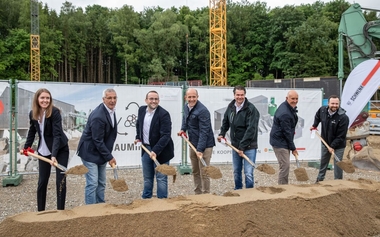
Another highlight of this issue is an exciting feature on the planning and implementation of a wet-mechanical plant for processing mineral waste into high-quality secondary raw materials in southern Germany – a joint project between SW-Baumineralik Donau Iller GmbH & Co. KG and ASE Technik, starting on page 26.
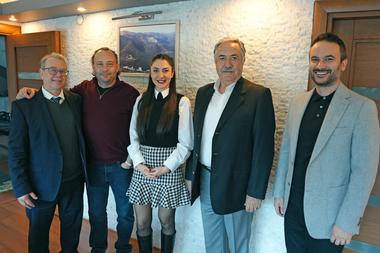
Equally worth reading is the interview on the use of a new emergency pull-wire and belt alignment switch in a heavy-duty version from steute Technologies during ongoing operations of the Vennebeck gravel plant on the River Weser, from p. 40. Three decades of partnership based on trust between Hosokawa Alpine and Aydin Madencilik are the focus of the second interview, from p. 50. The 4th stop on the farewell tour marking the retirement of long-time Hosokawa employee Dietmar Alber led to Gemlik near Bursa in Turkey.
Enjoy reading