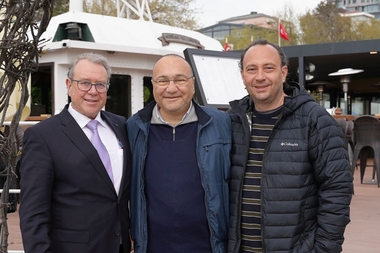

Part 4: Dietmar Alber meets Sedat Aydin and Hande Aydin Uslu in Gemlik/Turkey
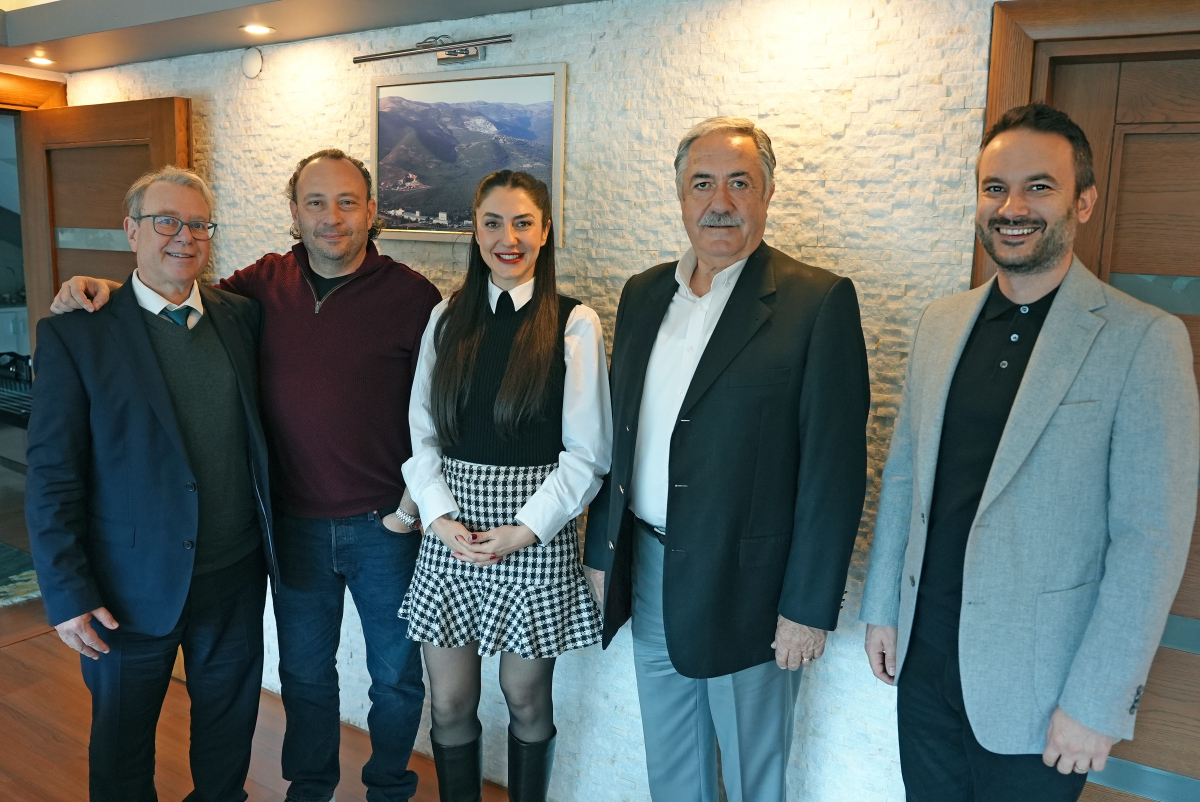


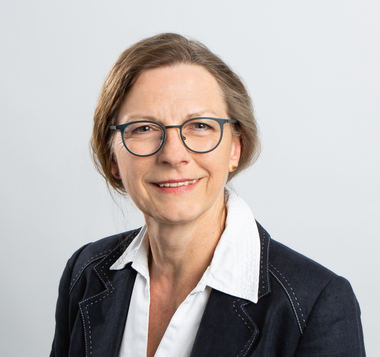
Following visits to Jordan Minerals in Amman, ACCM in Cairo and Erciyes Mikron in Istanbul (see AT MINERAL PROCESSING 02/2026, 03/2026 and 04/2026), the fourth stop on Dietmar Alber’s farewell tour brought him to Gemlik, near Bursa/Turkey. There, he met with Sedat Aydin and his daughter Hande Aydin Uslu, representing Aydin Madencilik – one of Hosokawa Alpine’s long-standing partners in the Turkish calcium carbonate industry.
Accompanying Dietmar Alber were AT MINERAL PROCESSING editor Lukas Höpfner and Görkem Cardak, Managing Director of Mikronsis and Hosokawa Alpine’s long-standing representative in Turkey.
Aydin Madencilik has relied on Hosokawa Alpine technology since the late 1990s. What began with technical advice and a shared vision developed into a partnership built on mutual trust, technical excellence and long-term commitment. During the interview, Sedat Aydin and Hande Aydin Uslu reflected on the company’s early years, the decisions that shaped its growth, increasing competition, the importance of raw material quality, the expansion into international markets and their expectations for future processing technologies.
From quarry owner to GCC pioneer: The beginning of the journey
AT MINERAL PROCESSING: Thank you very much for welcoming us today. Mr. Aydin, could you tell us about the origins of your company and the vision behind its foundation? And how did Hosokawa Alpine become part of that journey?
Sedat Aydin: My family has been involved in the mining industry for generations. Both my father and grandfather worked in this business, and I initially joined the family company. Later, however, I decided to establish my own business.
I already owned a quarry with high-quality raw material and saw an opportunity to enter the calcium carbonate market. What I lacked was experience in processing GCC and, more importantly, I had no idea where to begin or which technology partner to choose.
I visited Fırat Plastik, one of Turkey’s leading PVC pipe manufacturers. The owner was a long-time acquaintance of my grandfather, so I asked him for advice. I said, “I have the raw material and I want to enter the calcium carbonate business. Where should I start?”
I knew that grinding technology would be the key to success, but I didn’t know which supplier to trust. Their answer was immediate: “If you choose Alpine, you will have first-class technology and your customers will never question your product quality.” That was the first time I heard the name Hosokawa Alpine.
Once I had decided to work with Alpine, I looked for a way to contact the company. At that time, Alpine was represented in Turkey by Mustafa Ercin, who helped arrange the first contact. As luck would have it, Powtech was taking place just as I was preparing to launch my business. So I travelled to Powtech in Nuremberg – this must have been in 1997 – and that was where I met Dietmar Alber for the first time.
I wasn’t alone. A close friend accompanied me, helping with both translation and the technical discussions. He wasn’t a business partner and had no financial interest in the project. He simply wanted to support me as a friend. Looking back, that meant a great deal to me.
Dietmar Alber: Yes, I remember that first meeting very well.
Sedat Aydin: Once I understood Alpine’s technology, I was convinced it was exactly what I needed. However, there was one major obstacle: the investment was far beyond what I had anticipated. The price was around three to four times higher than I had originally budgeted, and I was honestly shocked.
What impressed me most was Dietmar’s reaction. He remained completely calm and immediately focused on finding a solution rather than discussing the problem. He said, “We can make this work. I don’t need an advance payment. All I need is a letter of credit from your bank with extended payment terms, allowing repayment to begin only after the plant has been commissioned.”
That proposal changed everything. At that time, I simply didn’t have enough capital for such an investment. I spoke to my father and my bank, arranged the financing and was finally able to move forward.
The first machine we purchased was an AWM 1200 table roller mill. At that time, it was new technology – not only for me, but also one of Alpine’s latest developments.
We reached an agreement during the exhibition. If I remember correctly, we even signed our first document there – essentially a handwritten letter of intent with the agreed net price noted on a proforma invoice. After Powtech, I travelled with Dietmar to Augsburg to visit Hosokawa Alpine. I was deeply impressed by both the manufacturing facilities and the extensive Test Centre. That visit ultimately convinced me that I had chosen the right partner.
Before everything became official, however, I had one difficult phone call to make. I called my father and said, “I’ve just bought a grinding plant and it costs three times more than we originally planned.” Naturally, he was shocked. But after we discussed the opportunity, he decided to support me. Although I founded the company, managed the business and took responsibility for the investment, I still needed my father’s guarantee to secure the bank financing. Without his confidence in me, none of this would have been possible.
That was how the story of Aydin Madencilik – and our partnership with Hosokawa Alpine – began.
Early success drives further investment
AT MINERAL PROCESSING: What happened after that first investment?
Sedat Aydin: The first AWM 1200 exceeded our expectations. The business developed very well, and we were highly satisfied with both the plant’s performance and the product quality. It didn’t take long before we started discussing a second investment with Dietmar.
Unfortunately, Turkey was hit by a severe economic crisis at that time. Under normal market conditions, the return on investment would have been much faster. Instead, it took us around four years to recover the investment. Even so, the success of the first plant gave me the confidence to continue investing in Hosokawa Alpine technology.
Dietmar Alber: If I remember correctly, the first coating system was already included in the initial project, while the second investment came later.
Sedat Aydin: Yes, that’s right. The CW 400 coating system was part of our very first investment. At that time, we were the only company in Turkey producing micronized calcium carbonate using this technology, which gave us a significant competitive advantage.
The benefits were immediately apparent. Energy consumption was lower, but even more importantly, the particle size distribution was considerably narrower and more consistent – exactly what customers in the plastics industry were looking for.
From the very beginning, we supplied leading companies in their respective industries. Many of those customers are still with us today. They have remained loyal because we have always delivered one thing above all else: consistent quality.
Of course, every production plant experiences occasional process deviations. That’s simply part of manufacturing. But over nearly three decades, our product quality has remained remarkably stable – and in the GCC business, consistency is everything.
Dietmar Alber: I remember visiting your plant several years ago with a group of Polish customers during a reference visit. At the end of the tour, their CEO asked whether they could take a product sample because they were genuinely impressed by the consistency of your material.
Sedat Aydin: Yes, I remember that very well. Consistency doesn’t happen by chance. It is the result of the right technology and a well-controlled production process. I said something that I still believe today: “Consistency is the key – not only in product quality, but also in ensuring a reliable and stable supply to our customers.”
Staying ahead through technology and better raw
materials
Sedat Aydin: When I founded the company, there were only a handful of calcium carbonate producers in Turkey. Today, the market is far more competitive, mainly because the country has abundant high-quality limestone reserves.
Many producers still rely on conventional ball mill technology. However, the products are fundamentally different. Ball mills typically produce a broader particle size distribution, whereas customers in the polymer industry increasingly demand coated GCC with a narrow particle size distribution, excellent consistency and reliable quality. That is exactly what our customers continue to tell us.
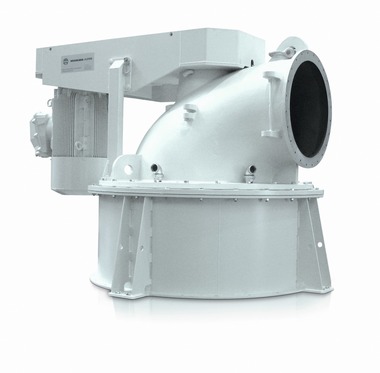
From the very beginning, Dietmar recommended a different approach: a dual low-energy processing concept. Coarser and medium-fine GCC grades, ranging from approximately D97 = 10 – 80 µm, are produced on Alpine AWM table roller mills, while the finer grades below D97 = 10 µm, down to around D97 = 3 µm, are manufactured using Alpine ATR technology.
Although this strategy required two separate investments, it proved to be the right decision. Across the entire product portfolio, both technologies offer significantly lower specific energy consumption than a conventional ball mill process while delivering superior product quality.
Initially, we worked with material from our own quarry. The limestone quality was good, but its colour was slightly creamy rather than bright white. As new competitors entered the market with whiter raw materials, we recognised the need to improve our raw material base. We therefore acquired a new quarry near Bursa, giving us access to significantly whiter limestone and allowing us to further enhance the quality of our products.
At the same time, demand for finer calcium carbonate grades continued to grow, particularly from manufacturers of PVC window profiles. These customers required coated ultrafine products with an extremely narrow particle size distribution and outstanding homogeneity. Around 2007, we therefore decided to invest in Alpine ATR micronisation technology, combined with a new Alpine Contraplex coating system.
The ATR vertical agitated ball mill enabled us to enter the market for ultrafine GCC products. When designing the plant, we deliberately planned ahead. While only one ATR mill was installed initially, the building layout and coating system were already designed to accommodate a second ATR line whenever future market demand justified the investment. That decision gave us the flexibility to expand without major modifications.
Dietmar Alber: Before investing in the ATR system, you had already purchased a TTC 500 ultrafine classifier.
Sedat Aydin: That’s correct. At first, I wasn’t entirely sure how large the market for ultrafine coated GCC would become or how quickly customers would adopt these products. But once we recognised the growing demand, it became clear that this market offered tremendous potential. That gave us the confidence to continue investing in ATR technology.
Dietmar Alber: I also remember another interesting story related to the Contraplex coating system. Görkem Cardak and I were sitting in the lobby of a hotel in Aksaray during a business trip when, quite unexpectedly, one of my Indonesian customers walked in. Surprised to meet him there, I asked what had brought him to Aksaray – a town that is hardly on the radar of most international visitors. He smiled and said he was looking for a second-hand Alpine Contraplex coating system. I immediately remembered that your original Contraplex 400 CW had been replaced during your plant expansion. So I called you and asked whether the machine was still available. You told me that you were willing to sell it if the price was right.
Without much hesitation, we drove together from Aksaray to your factory, inspected the machine and, before the day was over, our Indonesian customer had purchased it on the spot. In the end, he preferred your well-maintained Alpine system over a much older and considerably more expensive unit that had been offered elsewhere.
Sedat Aydin: Yes, I remember that story very well.
Opening international markets
AT MINERAL PROCESSING: Can you tell us how the market developed over the years? I assume that in the beginning your main focus was on the domestic market, as the production of fine GCC in Turkey was still quite limited. When did exports become an important part of your business?
Hande Aydin Uslu: I joined the company in 2010. Before that, I studied Electrical and Electronics Engineering and later Finance in the United States, where I also gained my first professional experience. Returning to Turkey was a major cultural change, as the way of doing business is quite different.
From the very beginning, I started thinking about how we could expand our international reach and explore markets beyond those we were already serving. I asked myself: ‘Where else in the world could we sell our products?’ Given the wide range of applications and the global demand for calcium carbonate, I was convinced that there were opportunities even in distant overseas markets. One day, I identified a potential customer in Brazil and told my father: ‘I’m going to sell calcium carbonate to Brazil.’ At first, he was rather sceptical and didn’t think it would be possible. But I believed in the opportunity and kept pursuing it. For me, this was about introducing a new perspective into the company: the idea that calcium carbonate could find customers virtually anywhere in the world, regardless of geographical distance.
From Brazil, we gradually expanded into other overseas markets, including Chile, Canada and many more. Today, Aydin Madencilik exports its products to customers around the world, and international business has become an important pillar of our company’s growth.
One thing has consistently helped us when entering new markets. As soon as we explain that our products are manufactured using Hosokawa Alpine technology, customers immediately recognise the name. Around the world, Hosokawa Alpine is associated with high-quality processing technology, reliability and consistent product performance. That reputation gives us credibility from the very first conversation and helps build trust with new customers.
AT MINERAL PROCESSING: So, would you say that the Hosokawa Alpine name also helped you open international markets?
Hande Aydin Uslu: Absolutely. Even when logistics are challenging or we are working with a customer for the first time, the reputation of Hosokawa Alpine and its technology creates immediate confidence.
In many international markets, customers may not know Aydin Madencilik at first, but they already know Hosokawa Alpine. That recognition gives us credibility from the very first conversation. Customers associate the brand with proven technology, reliable performance and consistent product quality. It helps us build trust quickly and opens doors that might otherwise remain closed.
Preparing the company for the next generation
AT MINERAL PROCESSING: We have already talked about your family’s history. When did the generational transition begin, and how is it shaping the future direction of the company?
Hande Aydin Uslu: My father is still our General Manager, so the transition is still ongoing. I haven’t fully taken over the leadership of the company yet, but I am responsible for our international business and all financial related matters in the company. At the moment, we complement each other very well. My father contributes decades of technical and operational experience, while I focus on developing international markets, strengthening customer relationships and identifying future growth opportunities. Furthermorger, my husband Ugur Uslu is Mechanical Engineer (M.Sc.) and my brother İbrahim Aydin is an industrial Engineer. They both have an Asst. General Manager title where my husband is responsible for administirative stuff and my brother is responsible for raw material production.
Our goal is not simply to continue the business, but to build on what my father created by combining his experience with new ideas, international growth and continuous innovation.
One thing has become very clear over the years: the real added value lies in the finer products. That is where technology makes the difference and where customers are prepared to pay for consistent performance and quality.
Today, our biggest challenge is production capacity. For some of our ultrafine grades, existing customers already utilise almost our entire production capacity. As demand continues to grow, we are seriously evaluating another investment in Hosokawa Alpine ATR technology.
We are also exploring new coating technologies and innovative additives to further improve product performance. At the same time, investment decisions have become much more challenging. Global markets are increasingly volatile. Logistics, energy costs, raw material prices and geopolitical developments can all change within a very short period. Nevertheless, if you want to remain competitive in the long term, continuous investment is essential.
Dietmar Alber: Are you also seeing increasing demand from the paint industry for finer GCC products?
Hande Aydin Uslu: Yes, definitely. We are receiving more and more enquiries about GCC slurry products, particularly from the paint industry. Fine GCC slurries enable paint manufacturers to reduce formulation costs by partially replacing more expensive titanium dioxide (TiO₂), while still maintaining the required product performance.
Another advantage is that the dispersing agents required for the slurry are already incorporated into the product. Together with the water, they become part of the customer’s formulation, which can simplify processing.
The main limitation is logistics. Because slurry contains a high proportion of water, transportation costs increase significantly with distance. As a result, slurry products are generally supplied only within a limited geographical radius, whereas dry GCC powders can be shipped economically to customers all over the world, if you have an extraordinary GCC quality.
Investing in sustainable energy for the future
AT MINERAL PROCESSING: What role does sustainability play in your business today? Are CO₂ reduction and sustainability targets already important for your company or increasingly requested by your customers?
Hande Aydin Uslu: To be honest, we are not yet experiencing significant pressure from our customers regarding sustainability or CO₂ reduction. Today, purchasing decisions are still driven primarily by product quality, consistency, reliability of supply and price.
Nevertheless, we see sustainability as an important part of our long-term strategy. The production of micronized calcium carbonate is highly energy-intensive, so reducing our electricity costs and carbon footprint makes both environmental and economic sense.
One of the projects we are currently evaluating is the construction of our own wind power plant. The approval process is complex and involves numerous regulatory requirements, so it is a long-term project. However, we believe it has great potential. If the project becomes a reality, we expect to generate a large proportion of our own electricity. During periods of surplus generation, we may even be able to feed excess power back into the public grid.
We have also evaluated solar energy. However, given our electricity demand, the required installation area would be extremely large, making wind power the more attractive and practical solution for our location.
AT MINERAL PROCESSING: So, sustainability is not only an environmental objective but also an economic one?
Hande Aydin Uslu: Exactly. In an energy-intensive industry like ours, improving energy efficiency and increasing the use of renewable energy are both environmental and business decisions. Reducing energy costs strengthens our competitiveness while at the same time contributing to lower CO₂ emissions. We believe that sustainability and economic success should go hand in hand.
Looking ahead: Future technology requirements
AT MINERAL PROCESSING: If you were to invest in Hosokawa Alpine technology again in the future, what would you expect from the next generation of equipment?
Sedat Aydin: The greatest growth potential lies in ultrafine products. That is clearly where the market is heading and where we can truly differentiate ourselves from the competition. Consequently, our biggest requirement is higher production capacity for the finest GCC grades.
We have already prepared for future expansion. The building, the infrastructure, the coating systems and the available space have all been designed to accommodate additional capacity whenever market demand justifies the investment.
Dietmar Alber: From a technical perspective, there are certainly opportunities to increase capacity. For example, if the feed material is slightly finer, throughput can often be improved. Another option would be to replace the existing Alpine ATP 315/6 classifier with a larger ATP 500/3 Next Generation (ATP/NG) classifier. However, the optimum solution always depends on the final product specification. While the larger classifier can significantly increase capacity, it may not always achieve the extremely fine cut points required for the highest-performance grades.
Sedat Aydin: That’s exactly our experience. We have already upgraded one of our classifiers to a larger model and achieved a substantial increase in production capacity. However, for our finest products – typically with 92 – 94 % below 2 µm – capacity remains the limiting factor.
For us, the challenge is no longer whether we can produce these ultrafine grades. It is how we can produce larger volumes while maintaining the same outstanding quality and consistency that our customers expect.
More than business: A friendship built over three decades
AT MINERAL PROCESSING: To conclude our interview, Dietmar Alber has now retired after nearly four decades with Hosokawa Alpine. What does it mean to you personally that he is visiting long-standing customers and friends one last time?
Sedat Aydin: Dietmar is a very special person to me. From the very beginning, I have trusted him completely. Over the years, our relationship has grown far beyond business. He is not just a business partner; he is a true friend.
In Turkey, friendship, trust and hospitality are deeply rooted values. That is exactly how I would describe our relationship. We have shared many years of cooperation, overcome challenges together and celebrated successes together. I sincerely hope that our friendship will continue for many more years.
Hande Aydin Uslu: I would also like to add something from my perspective. As the second generation, I haven’t known you for as many years as my father has. But whenever we contact you, you are always willing to help and share your experience. That has never changed.
My father often says: “I have a friend in Germany.” I think that says everything. Whenever you visit Turkey, you will always be warmly welcomed by our family.