

ForumMIRO 2025: Construction boom, securing raw materials, reducing bureaucracy, and digitalization
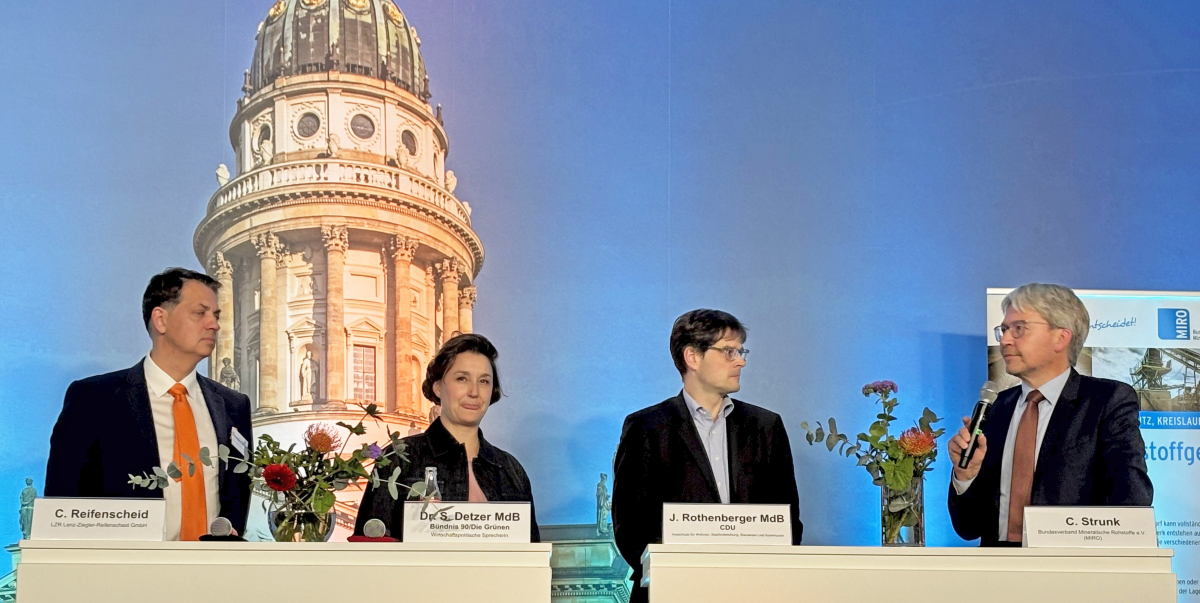


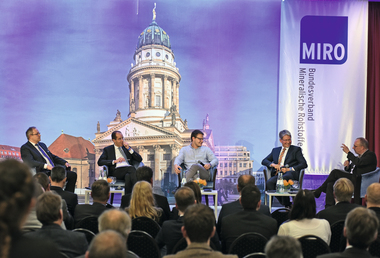
In the panel discussion, representatives from federal politics and the raw materials industry met to discuss how the current federal government’s plans can be implemented in reality. The government’s goal is to use the special infrastructure fund it has created to clear the investment backlog, modernize roads, bridges, and railways, and create affordable housing.
However, to achieve all this, the construction industry needs a secure supply of raw materials at the regional level, which is not currently available in every region of Germany. “It’s no longer five minutes to midnight, it’s now close to midnight,” said Christian Strunk, president of the MIRO association.
The discussion also focused on what needs to change in terms of approvals and planning, how these processes can be accelerated, and what is ultimately feasible. The general consensus was that the approval processes, some of which can take decades, must be rapidly simplified and accelerated. Approval fiction was a suggestion that came up throughout the event.
In the subsequent get-together, participants had the opportunity to exchange ideas, get to know each other, and continue the discussion over a casual buffet and drinks.
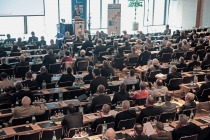
The first day of the event began with the general meeting, which, among other things, re-elected President Christian Strunk. He then officially opened ForumMIRO in the late morning. In his opening speech, Christian Strunk once again made it very clear that although Germany is a country rich in raw materials and has sufficient mineral resources, there are not enough permits. The consequence of this is that if the economy picks up, construction sites may not be able to be supplied with raw materials. “The will to act must change,” said the president of the MIRO association.
Stefan Rouenhoff, Parliamentary State Secretary at the Federal Ministry for Economic Affairs and Energy, made it clear in his political welcome address that the current raw materials situation, as described by Christian Strunk, is not only necessary for the government’s planned construction boom, but also for the implementation of the energy policy transition. Raw materials are needed, among other things, for the construction of wind turbines.
The extraction of mineral raw materials in Germany is to be simplified, according to the current coalition agreement of the federal government, but the framework conditions have become more difficult, e. g., due to increased production and labor costs. The problem: “Without mineral raw materials, nothing can be built in Germany,” said Rouenhoff. What is already working well is the circular economy, with recycled building materials already being used extensively in civil engineering.
Another topic addressed in the opening speeches was the promotion of young talent. Here, too, more work needs to be done to raise awareness, as there are currently far too few first-year students in the courses relevant to the rock industry.
In the following keynote speech by Boris Palmer, Mayor of the City of Tübingen/Germany, the forum participants were entertained with an entertaining account of the discussions and hurdles that have to be overcome in the day-to-day implementation of construction projects and approval procedures, and the sometimes nonsensical decisions this can lead to, as well as the real consequences of the approval backlog and bureaucratic madness. The reduction of bureaucracy and the simplification of approval procedures were clearly the main focus here.
The accompanying workshops began in the afternoon. In the first workshop on the topic of “Machines and Service of the Future”, Magotteaux presented its PPT model, a production-based payment model for the optimal and cost-efficient use of machines. Simatec introduced participants to the topic of which is the best method for processing crushed sand – dry or wet processing – using a large infrastructure project as an example.
Finally, Prof. Dr. Tobias Vraetz raised another promising topic, namely the use of AI in a wide variety of areas, whether for planning and development, production, or plant control.
Since climate protection plays a major role in rock mining, forum participants learned in another workshop whether raw material extraction poses a risk to biodiversity, before Klaus-Jürgen Boos presented a research project on the topic of “Effects of floating photovoltaics on the water quality of quarry lakes”.
Julia Müller from EcoVadis concluded with a presentation on the topic of sustainability assessments. Are these an image or an advantage factor? How important are such types of assessments and what is a measurable quality factor?
As in previous years, an exhibition was held at the Hotel Moa in parallel with the workshops. Numerous well-known companies from the stone and earth industry took the opportunity to inform visitors about their products and new developments and to discuss current topics with the participants.
As mentioned in the opening speeches, the raw materials industry is also necessary for the realization of the energy transition, so the handling of energy and costs is naturally also a key topic of another series of workshops at ForumMIRO. What innovative energy storage solutions are available and how are they used, or what impact does the German government’s CO2 pricing have? These are just some of the questions that were discussed in depth during this workshop session.
Before the evening event began, the topic of reducing bureaucracy, which was addressed at the beginning, was also discussed – both with regard to regulations in Germany and those of the EU. The Clean Industrial Deal vs. the Green Deal: is it a contradiction or rather a double deal? Joel Huckels concluded by attempting to clarify the extent to which AI can be an opportunity in the approval process and the extent to which the use of AI can actually simplify the reduction of bureaucracy or is already doing so.
The evening event, which is often used for intensive exchange and networking, took place this time at Europe’s largest inner-city beach club – Beach Mitte Berlin. Here, the participants met in a relaxed and informal atmosphere.
The second day of the event began with two more exciting series of workshops. While one series discussed occupational safety – reducing costs and increasing safety – the second series dealt with the topic of legal certainty. Here, too, the focus was on how to solve these kinds of problems quickly and effectively, rather than further exaggerating them. EU Restoration Law was one of the topics discussed here.
Timm Rotter concluded by engaging the audience in a discussion on how the use of AI, which had already been mentioned several times, could ultimately be made legally secure.
After the penultimate workshop discussed the topic of human resources management and digitalization, as well as the extent to which AI can be used effectively in this area and how the current shortage of personnel can be counteracted, the parallel workshop addressed the question of the extent to which the supply of raw materials is secured in view of the German government’s special infrastructure fund. This brought the discussion full circle to the political discussion at the beginning of the event.
It is clear that construction activity will increasingly shift toward maintaining existing buildings rather than new construction, that secondary raw materials from the power plant industry are currently in decline, and that it is questionable whether raw materials can still be provided until 2045.
What is certain is that something has to change and that approval procedures must be massively accelerated, with or without the use of AI. The will to change must be there, and the government must stick to its election promises and the coalition agreement and implement them.
It would be nice if there were noticeable changes in this direction by the next ForumMIRO in November 2027.
Nicole Dony, Bauverlag BV GmbH