

Tailor-made solutions from Hosokawa Alpine for challenging mineral raw materials
 © Hosokawa Alpine
 © Hosokawa Alpine
 © Hosokawa Alpine
 © Hosokawa Alpine
 © Hosokawa Alpine
 © ASCOM Carbonate and Chemicals Manufacturing
 © Hosokawa Alpine
 © Hosokawa Alpine
Mineral raw materials form a central foundation of our modern society. They are found, amongst other things, in high-tech products, building materials and technologies for the energy transition, and encompass such diverse raw materials as limestone, graphite, silicon, zircon silicate and rare earths. And just as varied as the natural properties of these raw materials are the requirements placed on their processing. Fineness and purity, particle size distribution and functionalization are just a few of the key factors that must be taken into account and specifically controlled. Abrasive, hard or difficult-to-disperse materials present additional challenges for manufacturers of building materials or components for high-tech devices. This is precisely what Hosokawa Alpine specializes in. The Augsburg-based engineering company offers a comprehensive portfolio of machines and systems for the processing of mineral raw materials – from fine and ultra-fine grinding through classification to surface modification. The equipment used includes, for example, jet mills, classifier mills, agitated media mills, modern ball mill technology and high-performance air classifiers, all of which can be adapted to the specific properties of the material in question. This enables mineral raw materials to be processed precisely to the required particle size, particle size distribution and purity. Customers receive turnkey plants that cover the entire process chain. The offering is rounded off by extensive testing and scale-up services, as well as the after-sales service provided by Hosokawa Alpine Blueserv.
From application to process: which technology for which mineral?
Mineral processing encompasses all methods used to prepare natural raw materials so that they are suitable for industrial applications.
The process begins with comminution, in which crushers or hammer mills reduce the feed material to a suitable particle size, thereby making downstream processes more energy-efficient. This is followed by fine or ultra-fine grinding using technologies such as ball mills, agitated media mills, jet mills or roller mills to achieve the required particle size. In the downstream classification process, air classifiers precisely separate the particles by particle size; any particles that are too coarse are returned to the grinding circuit. For fine powders, Hosokawa Alpine also offers solutions for dispersion and deagglomeration to break up particle agglomerates and improve product properties. The portfolio is complemented by surface modification systems, for example for the coating of calcium carbonate, as well as by drying technologies. By combining these technologies into integrated turnkey solutions, customers receive optimally coordinated systems from a single source. Here, Hosokawa Alpine works closely with partners across the entire Hosokawa Micron Group to cover the full spectrum of mineral processing.
But how do mineral processors go about finding the right plant technology? A whole range of selection criteria come into play here: these include, for example, the natural properties of the mineral raw materials, such as initial hardness, abrasiveness or moisture content. On the other hand, there are the specific requirements of the respective application, such as final particle size or purity. Added to this are requirements relating to the system itself, such as wear protection or an energy-efficient processing method.
Hosokawa Alpine relies on bespoke system configurations that are fully tailored to the individual customer, their specific feed material and their end product. “At our site in Augsburg, we have a test centre with over 30 installed systems. There, our staff put our customers’ applications through their paces: we gather data for the design of production systems, configure the machines to suit their requirements and support them in product development,” says Michael Kuhnen, CEO of Hosokawa Alpine. The fundamental requirements are examined as early as the initial project phases as part of feasibility studies. Following initial laboratory tests to assess the feasibility in principle, representative trials are carried out at the test centre to obtain reliable data for the further design of the production process. Based on this test data, the process is then scaled up to the final production plant. The meaningful results from the trials form the basis for the safe and economical design of industrial production processes.
Which plant is suitable for which mineral therefore depends crucially on the material properties and the requirements for the end product. The following examples illustrate which technologies have proven successful for different raw materials.
Graphite and silicon: key raw materials for batteries and high-tech applications
Graphite is one of the most important raw materials for the production of anode active materials (AAM) in lithium-ion batteries. The properties of the graphite used have a direct influence on the performance, service life and energy density of the resulting battery cell. The requirements for the end product vary depending on cell chemistry, battery design and area of application – ranging from electric vehicles and stationary energy storage systems to consumer electronics.
Rounded particles for high-performance batteries
A key parameter in graphite processing is the particle size distribution. For anode materials, narrow particle size distributions with d50 values of 8 – 25 µm are generally required. At the same time, high tap densities of around 900 – 1000 g/l are necessary, as these enable a higher energy density in the battery cell. A precisely controlled particle size and shape are crucial for this.
Furthermore, the aim is to achieve low BET surface areas of less than 10 m²/g in order to reduce undesirable side reactions and improve cycle stability. Equally important are particles that are as spherical as possible, as these increase packing density and promote a homogeneous electrode structure. At the same time, the uniform particle shape improves the coatability of the electrodes as well as lithium-ion diffusion. The result is batteries with higher capacity, faster charging behaviour and a longer service life. This is why rounding processes are among the key steps in the manufacture of high-quality anode materials. The challenge lies in achieving these product characteristics whilst maximizing yields and minimizing raw material losses. Hosokawa Alpine has therefore developed process solutions tailored to the specific properties of natural and synthetic graphite. The aim is to achieve higher yields whilst maintaining low energy consumption and high product quality.
Dedusting also plays an important role in the processing of graphite. The removal of the finest particles can improve the permeability of the electrode and have a positive effect on lithium-ion permeability. To reliably meet these requirements, grinding, classifying, dedusting and rounding processes must be optimally coordinated – and this is precisely where Hosokawa Alpine comes in. “Existing processes for rounding graphite are very energy-intensive and often still result in low yields of 30 – 50 %. This means that, in the current production of rounded graphite, a large proportion of the graphite used for lithium-ion batteries is lost during processing. To make the graphite rounding process more efficient, we have now developed a new process that requires fewer machines than before. This not only saves space, but also reduces the effort required for maintenance and servicing, as well as energy consumption,” explains Michael Kuhnen.
Processing solutions for natural and synthetic graphite
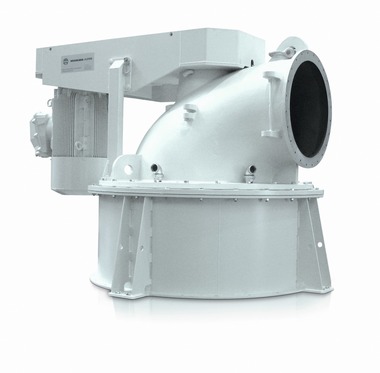
The Alpine Particle Rounder (APR) is used for rounding natural graphite. “First, the graphite is pre-ground in a classifier mill, our ACM. This is followed by batch-wise rounding with downstream classification. In this way, we have been able to almost double the tap density and utilise up to 80 % of the raw material,” says Kuhnen. In addition, short process times (3 – 10 minutes per batch), high throughputs and low specific energy consumption improve the plant’s cost-effectiveness. Depending on requirements, different target finenesses in the range of approximately d₅₀ = 8 – 25 µm can be achieved. This is followed by classification using Hosokawa Alpine’s ATP or TTD air classifiers and dedusting.
For synthetic graphite, Hosokawa Alpine offers the Zirkoplex ZPS classifier mill in two variants: a system for grinding and a specially developed variant for rounding and classification in a single pressure-shock-resistant machine. This significantly reduces the plant requirements. The ZPS achieves process yields of up to 85 % and combines high throughput wi
th low energy consumption. Here too, the increased tap density ensures improved storage capacity of the battery anodes.
Silicon as an alternative anode material
Although battery technology still relies predominantly on graphite as the anode material, silicon is regarded as a promising alternative. This semimetal can store up to ten times more lithium ions, enables significantly faster charging times and offers a lower discharge potential. This can significantly increase the range and performance of electric vehicles. One challenge, however, is the significant change in volume of silicon during charging and discharging cycles. These effects can be controlled using innovative processes. Hosokawa Alpine offers an ATEX-compliant solution comprising an AFG jet mill in an inert gas atmosphere and an ATP classifier for the contamination-free production of ultra-fine silicon powders with a precise particle size distribution and a high degree of automation.
Rare earths: The highest demands on fineness and purity
Rare earths comprise a group of 17 chemical elements that are indispensable for numerous key technologies. They play a particularly important role in the manufacture of high-performance permanent magnets based on neodymium-iron-boron (NdFeB) and samarium-cobalt (SmCo) alloys. These magnetic materials are used, amongst other things, in electric motors, wind turbines, sensors and modern electronic products. Precise processing of the raw materials is crucial for the production of high-quality sintered magnets.
Ultra-fine grinding under controlled process conditions
A key process step is the grinding of the alloys into ultrafine powders. Typically, particle sizes with a d50 value of less than 3 – 5 µm are targeted. At the same time, the oxygen content of the powder must be kept as low as possible, as even slight oxidation can significantly impair the subsequent magnetic properties. Equally important is controlled passivation after grinding to ensure the powder can be handled and processed safely. The challenge lies in achieving high throughputs whilst maintaining a narrow and reproducible particle size distribution.
The processing of NdFeB alloys is particularly challenging. These materials are pyrophoric and can react spontaneously on contact with oxygen. For this reason, grinding is usually carried out under a nitrogen atmosphere. Furthermore, modern systems are often designed to operate in a closed-loop gas system in order to reduce process gas consumption and lower operating costs.
Efficient powder production for high-performance magnets
Hosokawa Alpine has many years’ experience in the processing of rare earths and magnetic alloys and offers solutions for the precise grinding and classification of these challenging materials. The AFG-R jet mill plays a key role here. It was developed specifically for the grinding of neodymium-iron-boron (NdFeB) alloys and produces extremely fine powders with particle sizes of d₅₀ < 3 – 5 µm. The narrow particle size distribution achieved in this process improves sintering behaviour and contributes significantly to higher magnetic properties such as remanence and coercive field strength.
Thanks to its special nozzle arrangement, the mill is also suitable for materials that are difficult to grind. A downstream cyclone and filter system ensures high product yields with minimal material loss. The technology is available for both laboratory trials and production plants with throughputs of up to 250 kg/h.
Efficient dedusting for high-quality NdFeB recycling
A current trend in the industry is the processing of recycled NdFeB materials. With the growth of magnet recycling in Europe, the dedusting of NdFeB powders in particular is becoming increasingly important. “The recovery of end-of-life magnets presents particular challenges, as recycled materials in the ultrafine range are often contaminated with oxygen, carbon and other foreign substances. Our technologies make it possible to reduce the ultrafine fraction to a minimum, thereby maximizing the quality of the recycled materials,” explains Michael Kuhnen. To achieve this, the AFG jet mill is combined with the TTSP classifier. This solution enables the targeted removal of particles smaller than 1 µm and achieves recoveries of up to 85 %. At the same time, the process ensures a significantly steeper particle size distribution, improves the magnetic properties of the powder and can be integrated into existing jet mill systems. The technology is available at both laboratory and industrial scale and makes an important contribution to more sustainable and resource-efficient magnet production.
Limestone and GCC (Ground Calcium Carbonate): efficiency for filler and industrial applications
Ground calcium carbonate (GCC), produced from limestone, chalk or marble, is now one of the most important mineral fillers in industry. Whilst GCC was previously used predominantly as a cost-effective filler, the market is increasingly moving towards high-performance, high-quality products for polymers, paints, paper applications and breathable films. Consequently, the requirements regarding fineness, particle size distribution and surface quality are constantly rising. We have already detailed how various customers are utilising Hosokawa Alpine’s technologies in this regard in issues 2, 3 and 4 of AT MINERAL PROCESSING.
Demand for ever finer products
A clear market trend is the demand for ever finer products. Today, finenesses ranging from d97 < 10 µm right up to ultra-fine grades with d97 < 5 µm and up to d97 = 2.5 µm are required. At the same time, precisely defined and particularly steep particle size distributions are becoming increasingly important, for example for use in breathable hygiene and construction films. In such applications, the proportion of coarse particles must be limited to just a few ppm, whilst at the same time only very small quantities of particles smaller than 1 µm are permitted.
Maximum quality through intelligent grinding and coating processes
The cost-effective production of such grades requires an optimal combination of grinding and classification technology. Hosokawa Alpine offers various processes for this purpose, which are precisely tailored to the desired product fineness and plant capacity. Conventional ball mill and classifier systems cover fineness ranges from d97 = 5 – 45 µm and are suitable for a wide range of applications. For finer products in the range of d97 = 2.5 – 10 µm, ATR-type vertical dry agitated media mills are used in combination with air classifiers. “An efficient and practical approach to producing products with around 90 % of particles below 2 µm is the integration of additional ultrafine classifiers into the existing ball mill-classifier circuit. The targeted separation of the fine fractions not only enables the desired product to be produced, but also increases the efficiency of the entire grinding process,” recommends Michael Kuhnen.
Another important processing step is the surface treatment of calcium carbonate. Particularly for applications in plastics, GCC is frequently coated with technical stearic acid. The aim is to achieve high hydrophobicity and the most complete coating possible. Hosokawa Alpine uses optimised Contraplex CW II pin mills for this purpose, which enable uniform coating whilst simultaneously ensuring precise upper particle size limitation. “For perfect GCC coating, it is not enough simply to add stearic acid. It is crucial that the stearic acid and calcium carbonate react with one another under optimal process conditions. This is precisely what our coating technology is designed for – to ensure the highest product quality, reproducible results and maximum performance in polymer processing,” says Kuhnen.
Hosokawa Alpine thus offers tailor-made solutions for the processing of limestone into calcium carbonate across the entire value chain – from standard grades to ultra-fine premium products meeting the most stringent requirements for particle size distribution, surface quality and process efficiency.
Ceramic raw materials: efficient comminution and precise classification as the key to product quality
The demands placed on ceramic raw materials are constantly increasing. Whether tiles, sanitaryware, glass or technical ceramics – the quality of the end product is largely determined by the fineness, purity and homogeneity of the raw materials used. Accordingly, the process steps of comminution and screening are of central importance. Modern grinding and screening technologies now enable not only the highest product quality but also contamination-free processing.
Quartz and feldspar: high throughputs with maximum purity
Quartz and feldspar are among the most important ceramic raw materials. Both materials are used in large quantities in the manufacture of tiles, sanitaryware and glass products. This requires particle sizes in the range of d97 < 3 – 63 µm, combined with high production output and the lowest possible specific energy consumption.
In addition to the required product fineness, the prevention of contamination plays a particularly crucial role. Even the slightest introduction of foreign substances can have a negative impact on whiteness and thus compromise the quality of the end product. For these applications, ball mills are therefore used in combination with Hosokawa Alpine’s ATP or ASP classifiers. The use of Al₂O₃ wear protection ensures contamination-free grinding whilst simultaneously increasing system availability.
Zircon sand: a trend towards ever finer opacifiers
Zircon sand occupies a special position within the ceramics industry. The material is used both as zircon flour, with typical requirements of d99 < 45 µm, and as an opacifier. Particularly in the case of opacifiers, market requirements are increasingly shifting towards ultra-fine products with d50 values below 1 µm.
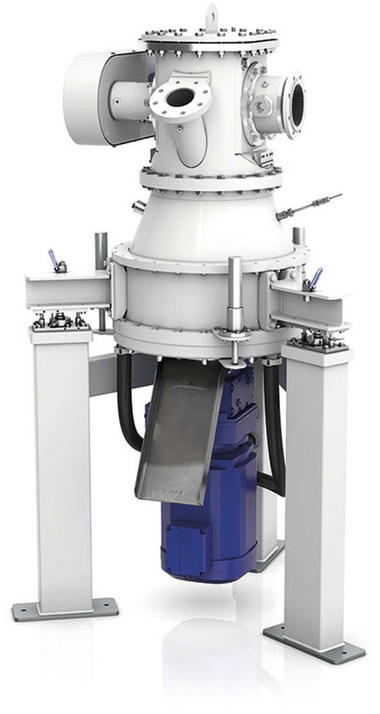
To meet these high requirements cost-effectively, Hosokawa Alpine relies on the ATP-PRO air classifier. The technology was recently successfully validated in collaboration with a Spanish partner. This enabled the production of end products with d50 < 0.85 µm and d97 < 3.5 µm.
“The market demands ever finer opacifier grades, whilst at the same time energy consumption and operating costs must not rise. With the ATP-PRO, we can produce zirconium products in the submicron range whilst benefiting from particularly efficient particle separation, reduced wear and low specific energy consumption,” explains Kuhnen. A further advantage lies in the reduced rotational speed required to achieve the same fineness compared with conventional classifiers. This has a positive effect on energy consumption and wear. The integrated Al₂O₃ wear protection also ensures the highest product purity, whilst exchangeable vanes enable rapid maintenance and minimize downtime.
Ceramic pigments: precision for consistent colours
With ceramic pigments, the focus is not only on fineness but, in particular, on colour quality and reproducibility. Applications range from ceramic products and tableware, through sanitaryware and glass, to enamel and coloured architectural ceramics.
Depending on the pigment colour and application, the requirements for particle size distribution vary considerably. “With ceramic pigments, even the slightest impurities can affect the colour effect. That is why contamination-free grinding, precisely defined finenesses and reproducible product quality are key priorities for our customers. This is the only way to ensure colour stability and consistent results across all batches,” says Kuhnen.
For these demanding applications, Hosokawa Alpine utilises in particular the AFG jet mill and the Pulvis system. Both solutions can be fitted with Al₂O₃ wear protection and enable the production of high-purity pigments with precisely defined finenesses.
Conclusion
Depending on the material, the processing of mineral raw materials places very different demands on grinding and classification processes. Whether graphite, silicon, rare earths, ceramic raw materials or limestone – the choice of suitable technology is largely determined by properties such as hardness, abrasiveness, purity requirements or target particle size. With its broad portfolio of grinding and classification technologies, Hosokawa Alpine covers the entire mineral processing chain and offers bespoke solutions for every application.
Particular strengths lie in the processing of ultra-fine, high-purity and difficult-to-process products, where the highest levels of precision and process reliability are required. At the same time, future markets such as battery raw materials, rare earths and sustainable building materials are becoming increasingly important and are placing new demands on efficiency, product quality and resource conservation. Tailor-made system concepts, optimally adapted to the material and application, therefore form the basis for cost-effective operation and consistently high product quality. Furthermore, Hosokawa Alpine enables the scaling of all processes from laboratory and pilot plant scale right through to industrial production, thereby creating the conditions for the safe and efficient market launch of new products. In this way, Hosokawa Alpine supports its customers in successfully mastering current and future challenges in mineral processing.