

New high frequency screen dials in spec with unique adjustability
25.03.2026Launching at CONEXPO-CON/AGG 2026, the new Superior Industries Independence™ High Frequency Screen (HFS) Plant offers maximum control over spec accuracy by combining a wide RPM range with adjustability across each deck section. As a result, processors meet tighter gradations and achieve more efficient fines processing, especially in tertiary crushing stages.
 © Superior Industries
“While producers may not be short on tons, they’re often short on control,” says Devon McKinney, portable plant product manager at Superior. He explains that as crushing circuits accelerate and specs tighten, many operations now generate more fines than traditional screening equipment can efficiently process, resulting in common bottlenecks such as excess recirculation, shortened media life, and stockpiles that miss spec.
© Superior Industries
“While producers may not be short on tons, they’re often short on control,” says Devon McKinney, portable plant product manager at Superior. He explains that as crushing circuits accelerate and specs tighten, many operations now generate more fines than traditional screening equipment can efficiently process, resulting in common bottlenecks such as excess recirculation, shortened media life, and stockpiles that miss spec.
He says, Superior designed its new Independence Screen to solve that operational mismatch by allowing adjustments from 3000 RPM to 6000 RPM across each deck section, fine-tuning that optimizes material separation amid ever-changing deposits. “It’s a plant that adapts to the deposit, rather than the deposit having to adapt to the plant,” says McKinney, adding that the plant is ideally targeted to material feed sizes under three-eighths inch – where producers need accuracy and optimal processing efficiency in manufactured sand, chip sizing, frac sand, industrial minerals, roofing granules, and more.
Emerging during its development, he adds, is the plant’s use for fines recovery, and the ability to turn waste products into saleable products. Also, in certain dry, low-clay applications, the high-frequency screen can minimize the need for washing equipment, a welcome potential for sites with water restrictions or limitations.
Next-level fine-tuning
At the core of the plant is a multi-slope 6-ft x 20-ft screen design that increases open area and throughput per square foot by up to 20 %, enhancing production capacities within a limited footprint.
Rather than a single operating speed, each deck is controlled in two sections and can be tuned independently via individual motors controlled by variable frequency drive (VFD). This “next-level” fine-tuning capability enables operators to “dial in” specs based on moisture content and feed size.
Longer lasting screen media
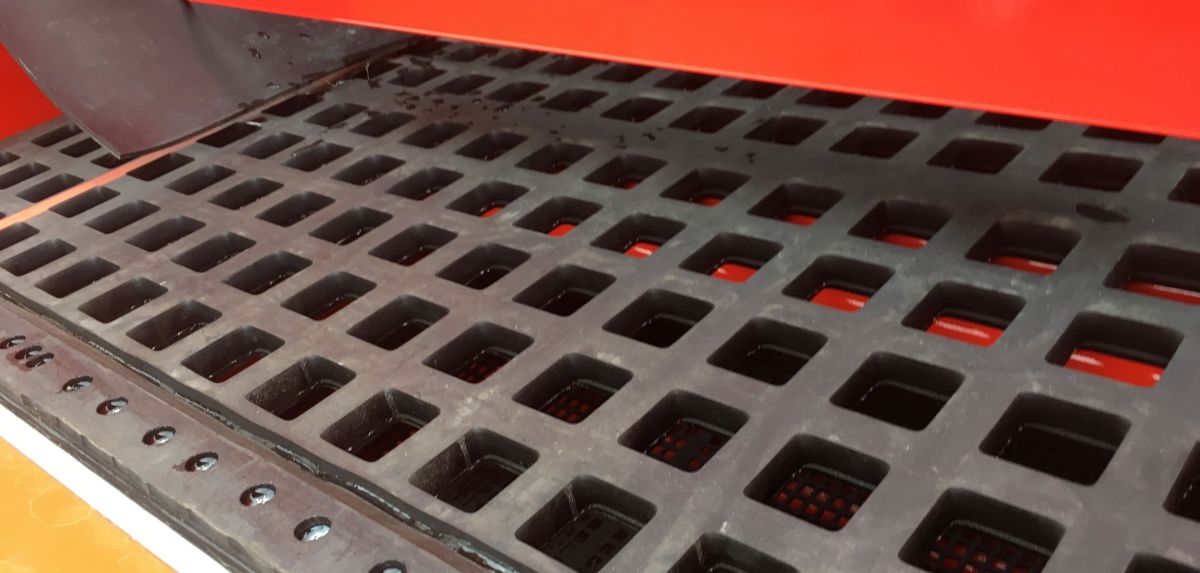
Superior’s Independence Screen Plant tackles two of the biggest pitfalls in high-frequency screening: limited media life and blinding. The plant features a vibrating feed distribution box that ensures material is evenly spread across the deck from the start, improving media efficiency and reducing buildup. Also, a uniform tensioning system evenly distributes tension across the media, preventing the premature wear and tear common in fine media screens.
Importantly, the screen is designed with an automated clean out cycle – a self-cleaning mode that ramps motors to 6000 RPM to clear media blinding without stopping production – significantly extending media life while reducing maintenance downtime.
Safe, fast & easy
Superior focuses on safety and maintenance ease. Outboard mounted motors allow adjustment and inspection without entering the screen body. Motors are accessible from the walkways while the unit is running.
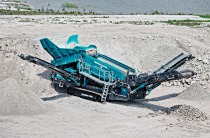
The portable plant incorporates patent pending self-leveling stairs that remain even no matter the angle of the screen or configuration of the plant, reducing trip hazards during service; and its hydraulic lift system enables rapid setup and teardown, while retaining stratification precision typically associated with stationary systems.